New York Premiere of Dipika Guha’s Play – Mechanics of Love – at the Paradise Factory (September 8 – 24, 2016)

DipikaGuha-MechanicsofLoveThe Cambridge Writers’ Workshop is proud to announce the New York premiere of Mechanics of Love, a new play by the talented playwright Dipika Guha, a CWW affiliate and dear friend.  Mechanics of Love, which is produced by To-By-Four Productions, a female-driven theatre and film production company dedicated to making work by women, for everyone, and directed by Elena Araoz, will play at the Paradise Factory in New York City from September 8 – 24, 2016.

In the play, a man who forgets everything falls in love with a ballerina who forgets nothing. That is, until she falls in love with him. And his wife. And the mechanic. This rapidly moving, madcap comedy explores how we love, who we choose, and the cost of making sense of it all.  On Mechanics of Love, Mina Morita writes:

“Written with a finely tuned and absurd lilt, wry poetry, and unnerving humor, her plays break open character stereotypes piece by piece to reveal the shared and vulnerable underbelly of our humanity. She creates worlds that exist beyond the traditional psychological realism of most American theatre, and employs the poetry of unexpected pairings and motives to capture a more truthful human experience.  Love is that intangible force that has assured the growth of humankind and our survival, driven the creation of entire industries, and caused artists to go mad trying to capture its essence. In Mechanics of Love, Guha unveils ‘a mythical European city, pressed up against a communist state’ that has recently fallen. The citizens are suddenly awakened to the possibility of being anyone, or falling in love with anyone… and everyone! It is a moment when cultural norms are being rewritten.”

Dipika Guha’s Mechanics of Love had its world premiere at the Crowded Fire Theater in San Francisco, CA in February 2016.  The cast of this mad-cap love dramedy includes actors Victoria Frings, Anastasia Olowin, Eric Miler, and Sathya Sridharan.  Performances will be held at the Paradise Factory (64 E 4th St, New York, New York 10003) and will take place on Wednesday and Thursday at 7:30pm and Friday and Saturday at 8pm with matinees on Saturday, September 17 & 24 and Sunday, September 11 & 18 at 2pm, and an opening night performance on Monday, September 12 at 7:30pm. Tickets are available online at www.tobyforproductions.com or by calling 1-800-838-3006.

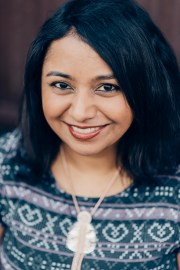
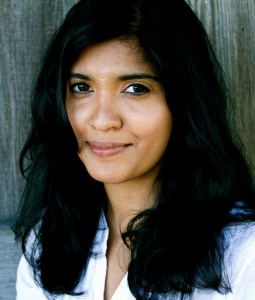
DipikaGuhaDipika Guha was born in Calcutta and raised in India, Russia and the United Kingdom. She is the inaugural recipient of the Shakespeare’s Sister Playwriting Fellowship with The Lark Playwrights Development Center, A Room of Her Own and Hedgebrook. Her plays include I ENTER the VALLEY (Upcoming; Theatreworks New Play Festival, Finalist Ruby Prize ’15); THE ART of GAMAN (KILROY LIST 2016, Upcoming: Berkeley Rep Ground Floor), MECHANICS of LOVE (Crowded Fire Theatre) and UNRELIABLE(developed at the Rattlestick Playwrights Theatre). She is currently under commission from South Coast Rep, Oregon Shakespeare Festival and Playwrights Horizons Theatre School.

Her work has been developed at Rattlestick Playwrights Theatre, The Atlantic Theatre Company, the Drama League, Cutting Ball Theatre, Playwrights Horizons, New Georges, Roundabout Underground, Shotgun Players, Red Bull Theatre, Leviathan Theatre, Naked Angels, The Cherry Lane Theatre, One Coast Collaboration, The Sam French OOB Festival, The 24 Hour Plays on Broadway and the Tobacco Factory (UK) amongst others. She’s been awarded residencies at the Hermitage Artist Residency, Djerassi Resident Artists Program, SPACE at Ryder Farm, McCarter Theatre’s Sallie B.Goodman Residency, Ucross Artists Residency and the Rasmuson Foundation in Sitka, Alaska. She’s an alumnus of Ars Nova Playgroup, the Dramatists Guild Fellows Program, Soho Rep W/D Lab, the Women’s Project Lab & the Ma-Yi Writer’s Lab.

Dipika received her BA in English Literature from University College London, was a Frank Knox Fellow at Harvard University and received her MFA in Playwriting at the Yale School of Drama under Paula Vogel. She is currently a Visiting Artist at the Schell Center for International Human Rights at Yale Law School and a Resident Playwright at The Playwrights Foundation in San Francisco. Despite a long run in the United States she still drinks tea. 

CWW Recommends: Books for the Dog Days of Summer!

CWW-Summer2016RecommendedReading
There’s just a few weeks of summer fun left, and the Rio Olympics are underway!  The beginning of a school year is upon us but there’s still some time left to spend with some great books this August!  So here are some recommendations from the Cambridge Writers’ Workshop on what to read before hanging up the surfboard and headin’ on home 😉  Thanks to Anna-Celestrya Carr, Alex Carrigan, AM Ringwalt, David Shields, Emily Smith, and Laura van den Berg for their wonderful recommendations below!

–Alex Carrigan (Curator)

StationElevenHCUS2Station Eleven by Emily St. John Mandel
(Recommended by Anna-Celestrya Carr)

Station Eleven is captivating and beautiful in a subtle way. I’m known to read the last page first of any book I pick up. I like having an idea of where a story is going to go. For this book I resisted looking ahead. I found myself enthralled and surprised the entire time.  Dystopian fiction has become one of my favorite genres and Station Eleven stands out in its category.

The novel opens with a famous actor having a heart attack and dying on stage while playing King Lear. That same night, there is a massive outbreak of a deadly virus called the Georgia Flu, and within weeks, 99 percent of the world’s population is wiped out. In a world decimated by a global pandemic, where the few survivors live in scattered communities without electricity, the Traveling Symphony goes from town to town in the Great Lakes region, performing Shakespeare and classical music. The story plays around with time and perspective, jumping back and forth between After the Collapse and Before the Collapse. We circle around different characters’ lives and sometimes see the same scene from a different person’s view. A gorgeous read.

91lUeBR2G1LThe Girl on the Train by Paula Hawkins
(Recommended by Alex Carrigan)

Gillian Flynn’s Gone Girl is one of my favorite recent “popular” books, and a book that helped remind me how much I love modern mysteries. I heard that The Girl on the Train was similar to Gone Girl, so I checked it out. What I found was a mystery novel I had to read in one sitting, causing me to spend nearly four hours in a cafe reading the entire book one rainy Sunday afternoon. The novel follows a woman named Rachel, an unemployed, alcoholic, divorcee, who spends her train rides fantasizing about what she thinks is the perfect couple living in one house along the tracks. When the woman of the couple goes missing, Rachel discovers that she has a connection to the mystery, and through her interference comes to confront her personal demons and sees how dangerous her involvement is. Hawkins makes a very flawed and relatable protagonist in Rachel, and creates a mystery that, while maybe not the most unique, is still quite thrilling to read, and only leaves me excited for the film adaptation coming out this year.

51fS0HCyAQL._SX333_BO1,204,203,200_The Disaster Artist: My Life Inside The Room,
The Greatest Bad Movie Ever
by Greg Sestero, and Tom Bissell

(Recommended by Alex Carrigan)

Tommy Wiseau’s The Room is one of the worst movies ever made, but has one of the most devoted fan followings ever due to how hilariously awful the film is. The Disaster Artist, co-written by one of the leads in the film (Sestero), is a tell-all that reveals how the film was made and goes into the bizarre culture surrounding it. What follows is a book that veers from painfully hilarious to just plain painful. At the heart of the story is the odd friendship between Sestero and Wiseau, which paints Wiseau as a creep, a fool, a dreamer, an enigma, an entrepreneur, and an artist all at once. What could be a book that exists to bash Wiseau for his egomania, his misogyny, and his deep misunderstanding of how to act as a person is instead a book about art itself. It shows that even the people who make bad movies are sympathetic and have dreams they want to fulfill, even if they aren’t very good at it. The books shows that everyone involved in The Room (except for maybe Wiseau depending on how you read him) deserved better, and is quite enjoyable to read after seeing the movie. It shows that even misguided passion projects can still create beautiful, inexplicable, and valued art despite every possible obstacle in the way.

Everything+I+Never+Told+You+-+Celeste+NgEverything I Never Told You by Celeste Ng
(Recommended by Alex Carrigan)

Most stories that deal with mysterious deaths focus on the mystery and the investigation, but often don’t focus on the impact the death has on the victim’s family. Celeste Ng’s debut novel Everything I Never Told You follows a Chinese-American family in 1977 after their daughter is found dead in a lake. What could be a Twin Peaks-esque mystery is instead a meditation on race, gender, and loss. By focusing on a mixed race family in a small town during the late ’70’s, Ng shows how the era played into the attitudes of the characters, from the father who tries to downplay his Chinese heritage and blend in, to the mom who wants nothing more than to ensure her daughter doesn’t fall into the same mistakes she made. At the heart is the dead girl, Lydia, and it’s through her death and the time leading up to it that the reader realizes that what doesn’t matter is why or how Lydia died, but rather what her death reveals about the family and the time they lived in.

51mSJNECGyL._SY344_BO1,204,203,200_Americanah by Chimamanda Ngozi Adichie
(Recommended by Alex Carrigan)

When my brother read Americanah, he said Nigerian author Chimamanda Ngozi Adichie instantly became his favorite living writer. I recently picked up the book, and I found that he was completely justified in believing that. Americanah follows two young Nigerians, Ifemelu and Obinze, and they grow up in Nigeria and move on with their adult lives. Ifemelu travels to America for college and starts a successful blog dealing with her facing race for the first time in her life. Obinze becomes an undocumented worker in England, and his story provides a contrast to Ifemelu, who flourishes in her new environment while he finds it difficult to settle into the first world. The book taught me a lot about Nigeria in the 90’s and 00’s, and is a really good book for dealing with race relations, primarily for how non-American blacks deal with race. Adichie imbues her characters with such spirit and detailed voice that it becomes easy to see them as real people, so I have found her an author I really want to read more of in the future.

APS_24_COVER_RGBA Public Space: Issue 24
(Recommended by AM Ringwalt)

This issue of A Public Space focuses on artists creating outside of their primary mediums; Etel Adnan writes in epistolary prose about weaving and David Lynch is interviewed about his paintings. A devoted Adnan fan, I excitedly picked up this issue to absorb more of her voice. As she shares images of trees “yellow, but haloed” . . . “still [with] a green heart and golden edges, such tender vegetal icons,” I realized that summer is the time of weaving–gathering light–before colder seasons and a scarcity of unburdened hours.

PIR_cover_118_smaller_image_visual_220_331Poetry Ireland Review Issue 118: The Rising Generation
(Recommended by AM Ringwalt)

In early 2016, I lived in Dublin and worked as an intern at the Irish Writers’ Centre. While there, I fell in love with its myriad journals (Guts and Gorse to name a few). While journals with names like Poetry Ireland Review connote tradition–and thus old white men–I never read a copy until I saw their Rising Generation issue, published in sync with the centenary of the 1916 Rising. Honoring “rising” poets (new and successful in the field, not necessarily young), this issue highlights poets including Jessica Traynor (of the Centre’s A Poet’s Rising) and provides accompanying questionnaires, prompting its featured poets to extrapolate on ideas such as: “Would you rather be the poet or the poem?”

51Ec+CJgOOL._SY344_BO1,204,203,200_A Year with Hafiz: Daily Contemplations
by Hafiz and Daniel Ladinsky
(Recommended by AM Ringwalt)

I first saw A Year with Hafiz on Ariana Reines’ Tumblr. Always spiritual, always prophetic, her website is a well of meditation and insight. (A recent post highlights Muhyiddin Ibn ’Arabi’s  “Our heart holds within it all forms, that our hearts created. We have made a meadow there for gazelles, children, music, dance and dreams.”) Immediately after reading Reines’ chosen excerpt, I ordered a used copy of A Year with Hafiz online. Though a devotional style book isn’t necessary to read one Hafiz poem a day, the book itself is beautiful and compiles Hafiz’s writing in a way that compliments the changing months and seasons. Starting this “devotional” in the summer has allowed me to more deliberately meditate on certain phrases each day with the freedom inherent in the season. Take May 25, for example, as a preface to the summer: “Like a great starving beast my body / is quivering, fixed on the scent of light.”

51uHU-PRXQL._SX258_BO1,204,203,200_The Poet, The Lion, Talking Pictures, El Farolito, A Wedding in St. Roch, The Big Box Store, The Warp in the Mirror, Spring, Midnights, Fire & All
by C.D. Wright
(Recommended by AM Ringwalt)

C.D. Wright, described by Ben Lerner as “an utterly original American artist,” is a bright angel reminding me, time and again, how the act of writing is the act of salvation. Writing, after all, is a saving force, one that evokes internal and external revolutions. Though I was never lucky enough to meet Wright, I felt her brightness near upon the publication of The Poet, The Lion, Talking Pictures, El Farolito, A Wedding in St. Roch, The Big Box Store, The Warp in the Mirror, Spring, Midnights, Fire & All. This book, with its multitudinous worlds (the first poem, among many others, is titled “In a Word, a World”) is a manifesto of the spiritual potency of poetry. This book, at home in her canon of nonconforming literature, is a call to push boundaries beyond experimentation and into innovation. The Poet, The Lion…, published very the month of Wright’s passing, is a reminder of mortality and, beyond life (and death), the endless power of poetry.

Last Sext Cover 092815.inddLast Sext by Melissa Broder
(Recommended by AM Ringwalt)

I picked up a copy of Last Sext while on a date with my partner at the Harvard Bookstore last month. These dates always go the same–I say I won’t buy a single book and I leave with more than one. Always fodder for an empty wallet and, most importantly, for, at its best, transformative inspiration, I’m thankful that I found myself squatting in the poetry section absorbed in a copy of Broder’s book. I’ve never read a collection of poems containing cunnilingus, boring angels, clock-obsessed Americans, third eyes, centaurs, gypsies, “Me saying more and the light saying yes.” The intersections between dark and light, as they both illuminate sex, farting, hallucinating and “childhood feeling” (among countless other phenomena), remind me that darkness, too, can be an illuminating force. I urge you to read her poem “Salt,” published in Poetry in 2014. Then, I urge you to say more and get a copy or two or three of Last Sext.

41sMfxQdi6L._SY344_BO1,204,203,200_The Pharmacist’s Mate by Amy Fusselman
(Recommended by David Shields)

The book fluctuates wildly and unpredictably from Fusselman’s attempt to get pregnant through artificial means, her conversations with her dying father, and his WWII diary entries. I don’t know what the next paragraph will be, where Fusselman is going, until—in the final few paragraphs—she lands on the gossamer-thin difference between life and death, which is where she’s been focused all along, if I could only have seen it.

51psU3H7kSL._SX321_BO1,204,203,200_Humiliation by Wayne Koestenbaum
(Recommended by David Shields)

Humiliation runs like a rash over the body of Koestenbaum’s work. Here he confronts the feeling directly and the result is an extraordinary meditation on—I don’t know how else to say it—the human condition.


maggienelsonThe Argonauts by Maggie Nelson
(Recommended by Emily Smith)

Maggie Nelson makes the public private in this genre-bending, poetic recollection of her pregnancy and husband Harry Dodge’s transition. Like her previous works, Nelson draws from critics like Judith Butler and Roland Barthes to explore her personal perspective on sexuality, gender, queer family making and the radical idea that motherhood never has to be equated with the loss of individual freedom.

halfformedA Girl is a Half-Formed Thing by Elmear McBride
(Recommended by Emily Smith)

Although A Girl is a Half-Formed Thing was just recently published, it’s already been hailed as a classic. In this novel surrounding sexual abuse and a sister’s relation to her young brother diagnosed with cancer. Elmear McBride, who spent ten years trying to publish the novel, has been compared to James Joyce and Virginia Woolf for her experimental style, which has often been described as “electric.”

2d0d11c0-51a0-0132-0b3e-0eae5eefacd9Binary Star by Sarah Gerard
(Recommended by Emily Smith)

Sarah Gerard’s Binary Star follows the story of an anorexic young woman and her neglectful, alcoholic boyfriend. The two feed off of each other’s negativity until taking a road trip and discovering vegananarchism. The short, lyrical novel tackles diet culture and the illness that, as a result, the two love to keep company. Like its title, the novel shines bright and fast, held together by its own gravity until its shocking, explosive end.

Heartbreaker by Maryse Meijer and Barefoot Dogs by Antonio Ruiz-Camacho
(Recommended by Laura van den Berg)

978037453606051rnEnLhHyL._SX326_BO1,204,203,200_


Heartbreaker is Maryse Meijer’s debut collection, with stories following a wide variety of characters as they deal with desire, vulnerability, sex, heartbreak, and survival. Barefoot Dogs is a series of connected stories about the members of a wealthy Mexican family after the patriarch goes missing.  These collections are wildly different in style and approach, and are wildly successful in creating a singularly absorbing world for the reader to inhabit, from the first story to the last.

Bazodee – a film by Claire Ince (CWW Alumna) reviewed by Anna-Celestrya Carr

Bazodee: a state of dizziness or confusion often used with regards to love or infatuation. In other words, caught up in a magical moment. I experienced this last week when I attended the international premier of Bazodee at the Playstation Theater, in the heart of Time’s Square.

Bazodee is a film combining the styles of a Bollywood musical, the American rom-com and the cultural aspects of the Caribbean. Dubbed “Trini-wood” by members of the cast.  The story is of Anita Panchouri (Natalie Perera), the dutiful Indian daughter of a deep-in-debt businessman (Kabir Bedi), who is about to marry a family friend and wealthy Londoner (Staz Nair) when a chance encounter with a local singer, Lee de Leon (Soca music star Machel Montano in his film debut) sets things askew. After failing to become internationally known as a musician in London, Lee returns home to Trinidad disheartened.  In search of a muse, Lee agrees to perform at the engagement party for both families. Unable to deny their mutual attraction, and with the excitement of Carnival approaching, Anita must now choose between the answer to her family’s financial prayers and the possibility of real love.

Bazodee stars legendary soca and calypso artist Machel Montano, along with internationally acclaimed actor Kabir Bedi, Staz Nair, Natalie Perera, and scene stealers Valmike Rampersad, Cindy F. Daniel and Chris Paul Smith.

Representing the Cambridge Writers’ Workshop (CWW), I stood in line next to Roger Paperno, the director of the music video “I Forget,” one of the original songs written for the film. The line attending the premiere extended to Broadway and down the block. The pre-show reception continued past 7:30pm while people filled the theatre. In attendance were television, print and online media from several South Asian countries as well as from Europe and the US that covered the red carpet as Machel Montano and other main actors arrived.

Susanne Bohnet, CEO of Serafini Pictures and Producer of Bazodee, opened the night with “We at Serafini Pictures, we are here to bring you relevant stories from a view point which has nothing in common with the white supremacy of Hollywood. We believe to honor who we are and to celebrate who we are. Our films will feature in the leading rolls Africans, African Americans, Asians, West Indians, Latinos, the LGBT community and everybody who we feel deserves a strong voice and an authentic viewpoint. Bazodee is a passion project of many; it’s a film we’re very proud of.”

Directed by Todd Kessler, former show runner and a co-creator of Blue’s Clues. The cinematography captured the atmosphere of Carnival and the striking beauty of Trinidad and its people. The film boasts a full cast of people of color. Every actor in Bazodee is authentic, and their actual background is close, if not identical, to the background of the character they are playing. Most of the actors in the film are Trinidadian, which I found refreshing as compared with the standard Hollywood whitewashed rom-coms.

The film was a labor of love that was in development for 10 years. It was written by Claire Ince, who is an alumna of the 2015 Cambridge Writers’ Workshop Spring in Newport, RI Writing Retreat, where she workshopped the script.  All of us at the CWW are so proud of her and happy to see such a worthwhile project come to fruition.  I, myself am an alumna of the 2016 CWW Spring in Newport Writing Retreat, so it was a unique experience to be able to attend the event as a fellow CWW Newport alumna.

The film is a universal love story, one could say a bit cliché, but set against the backdrop of Carnival on the vivid, colorful islands of Trinidad and Tobago, it becomes fresh.  The film’s themes include unity and honesty triumphing in the face of adversity. The story has potential to be a serious drama exploring the struggle of an inter-racial/cultural relationship and the sacrifice Anita experiences for the sake of her family. However, Bazodee has a lightheartedness throughout.

Watching the film, I realized that as an Indigenous woman, I’ve never been in a theater that had an audience almost completely of people of color. It was incredible to witness the audience react to and connect with a film that was made predominantly for them. Sitting in the theater, there was a dialogue between the screen and the people. I believe there is a real sense of freedom when people are able to see themselves represented in media. The small moments of female friendships had the women in the audience cheering. Scenes that were written for the audience were a riot. One man yelled out “informer!” at a confrontational point of the movie.

The on-screen chemistry between Montano and Perera was believable and they looked good together. The most impressive performance was from UK-based Trini actor Valmike Rampersad. His creepy, uptight, lurking, always suspicious character Nikhil provided the gravity and suspense to the film. He was as charming off screen as he was villainous onscreen.

Soca is the heartbeat of the film. The music felt like another character throughout the story. Most of the musical numbers were taken from Montano’s discography reinterpreted and remixed for film. Passionate and beautiful. The film is a good introduction to soca music.

The most obvious flaw in the film was with the editing. There were some continuity issues, and there were points that could have been brought up earlier in the film that would have made the ending more authentic. However, that didn’t stop the film from being entertaining and becoming a valued part of Trinidad’s filmography.  The premiere ended with an after party and special live performance by Machel Montano and Friends.

Bazodee opens in movie theaters across the United States on August 5, 2016.

Anna-Celestrya Carr, CWW Media (Audio/Visual) Development Intern

CWW in Granada 2016 Writing Retreat: Day 7 & 8

On Wednesday, Alexander Chee taught his informative class “Historical Fiction: Part 3.” On Thursday, Rita Banerjee gave her essential class on “Revision & Publications.”  In the afternoon, we met one on one again for more feedback on not only our manuscripts-in-progress, but new writing generated on the retreat.  Many of us enjoyed some final tapas, visiting restaurants we learned about during our tapas tour earlier in the week.  The community came together for a farewell dinner that boasted stunning views of Granada and Al Hambra.

CWW in Granada 2016 Writing Retreat: Day 5 & 6

On Monday, Alexander Chee taught “Historical Fiction: Part Two” in the morning, and in the afternoon, we had our first set of writing consultations.  It was meaningful to have writers meet one on one with faculty members to receive specific feedback on the particulars of individual manuscripts. On Tuesday, Rita Banerjee gave her popular class on “Emotion and Suspense in Theater, Poetry, and (Non)Fiction.”  We enjoyed taking in the architecture of Granada as well as the beauty of the Andalusian landscape on our long walks during our free time.  Some of our best ideas are born during quiet walks!

CWW Summer in Granada Writing Retreat: Day 3 & 4

Alexander Chee taught his class “Historical Fiction: Part One in the morning on Saturday.  One of our writers enjoyed a weekend trip to Cordoba to do research on her novel set there in the 1970s.  On Sunday, Frederick-Douglass Knowles II taught his class “The Socio-Political Power of Hip Hop: Tupac Shakur, Martyr or Menace.”  There was incense, there were powerful words, there was history turned on its head, all from our beautiful classroom with a balcony overlooking Al Hambra.


Day 8: CWW Barcelona & South of France Writing Retreat

Today,  Heidi Pitlor taught her very practical and helpful class, “The Nuts and Bolts of Publishing.” We had some great discussions and gained some clarity on what editors are looking for and how to write a query letter.  Then, we all went off on our own to write for a few hours before heading into town for a final delicious dinner.  We all enjoyed discovering the ancient Roman road as well!


Day 7: CWW Barcelona & South of France Writing Retreat

It was a relaxing Sunday for everyone, and since everything was closed in town (as is the Catholic custom in such European towns), we stayed at the hotel and concentrated on our writing, taking breaks in the pool. Rita Banerjee taught her class on Emotion & Suspense in Theater, Poetry and (Non)Fiction, and we all learned about Rasa theory.  In the evening, we enjoyed listening to each other read our original work.