August 9 – Writing & Yoga at the Château de Verderonne

Writing life

Writing life

Day three of the Yoga and Writing Retreat was spent exploring the mystery of the Château de Verderonne and using our finds as fuel for our writing, eating French food, and working out our kinks on the yoga mat. We earned the clinks of “Salut” by the end of the day. (Always make eye contact in your toasts!)

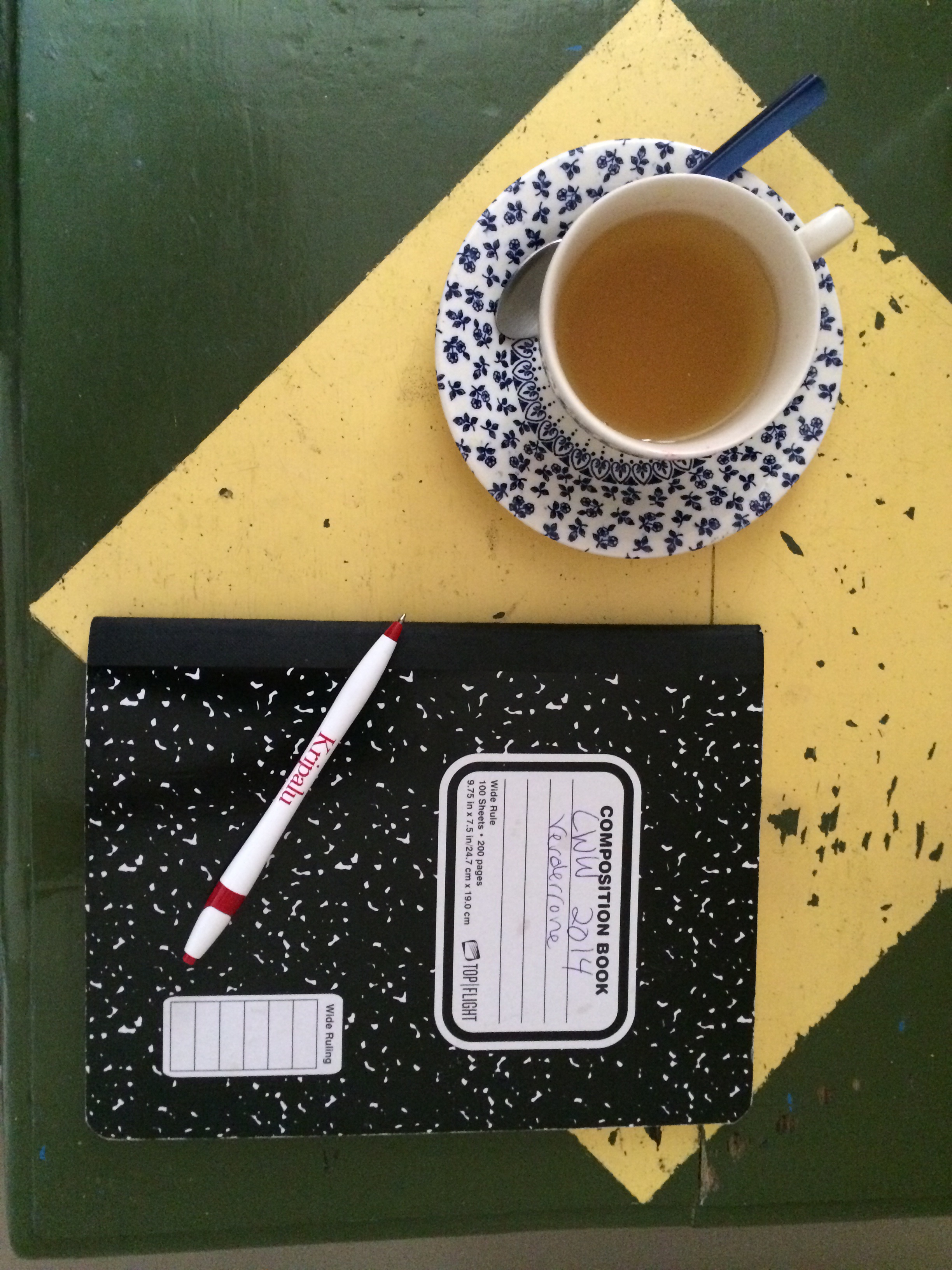
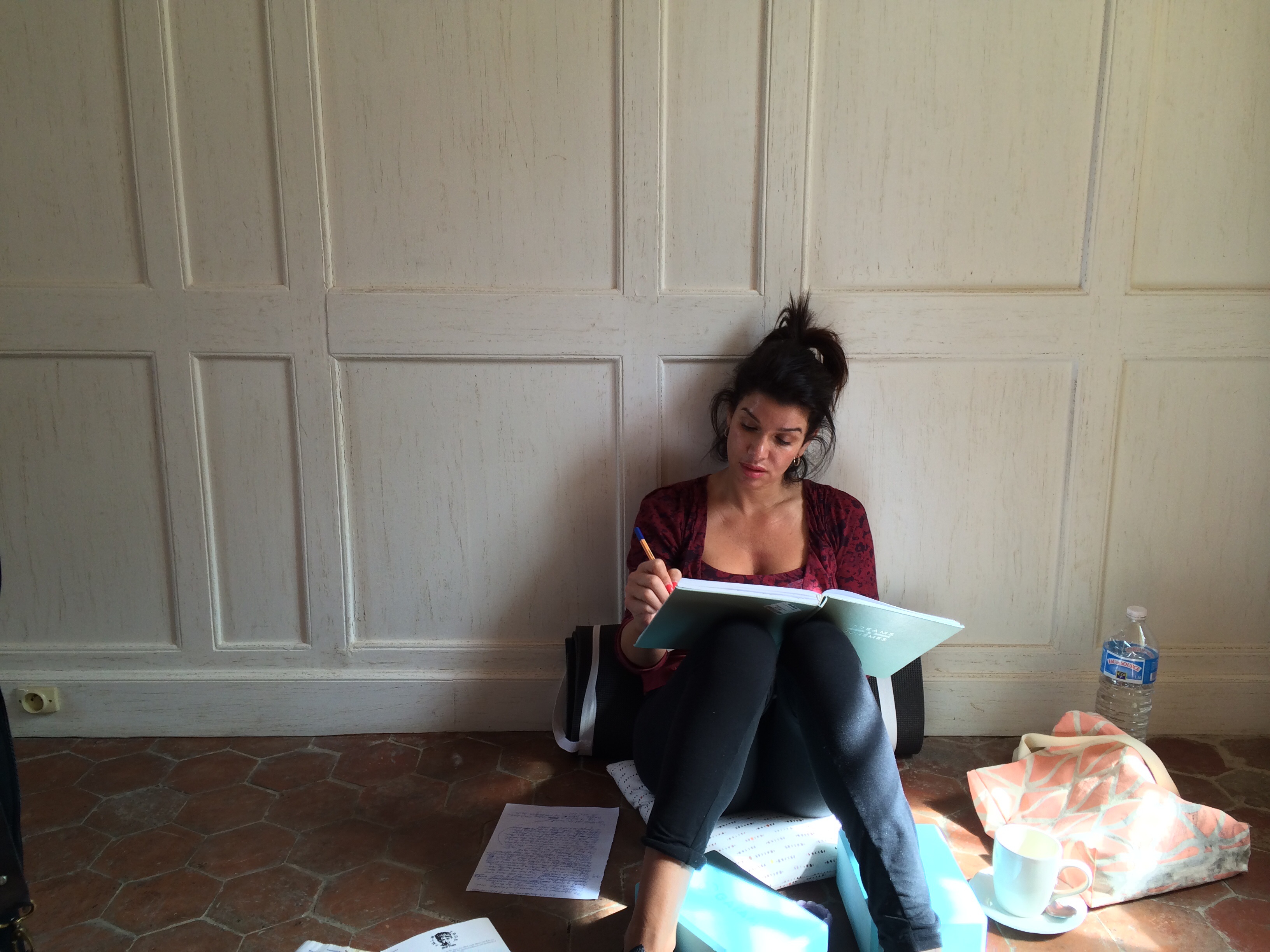
Start the day with journaling and green jasmine tea before morning rejuvenating yoga with Elissa.


image

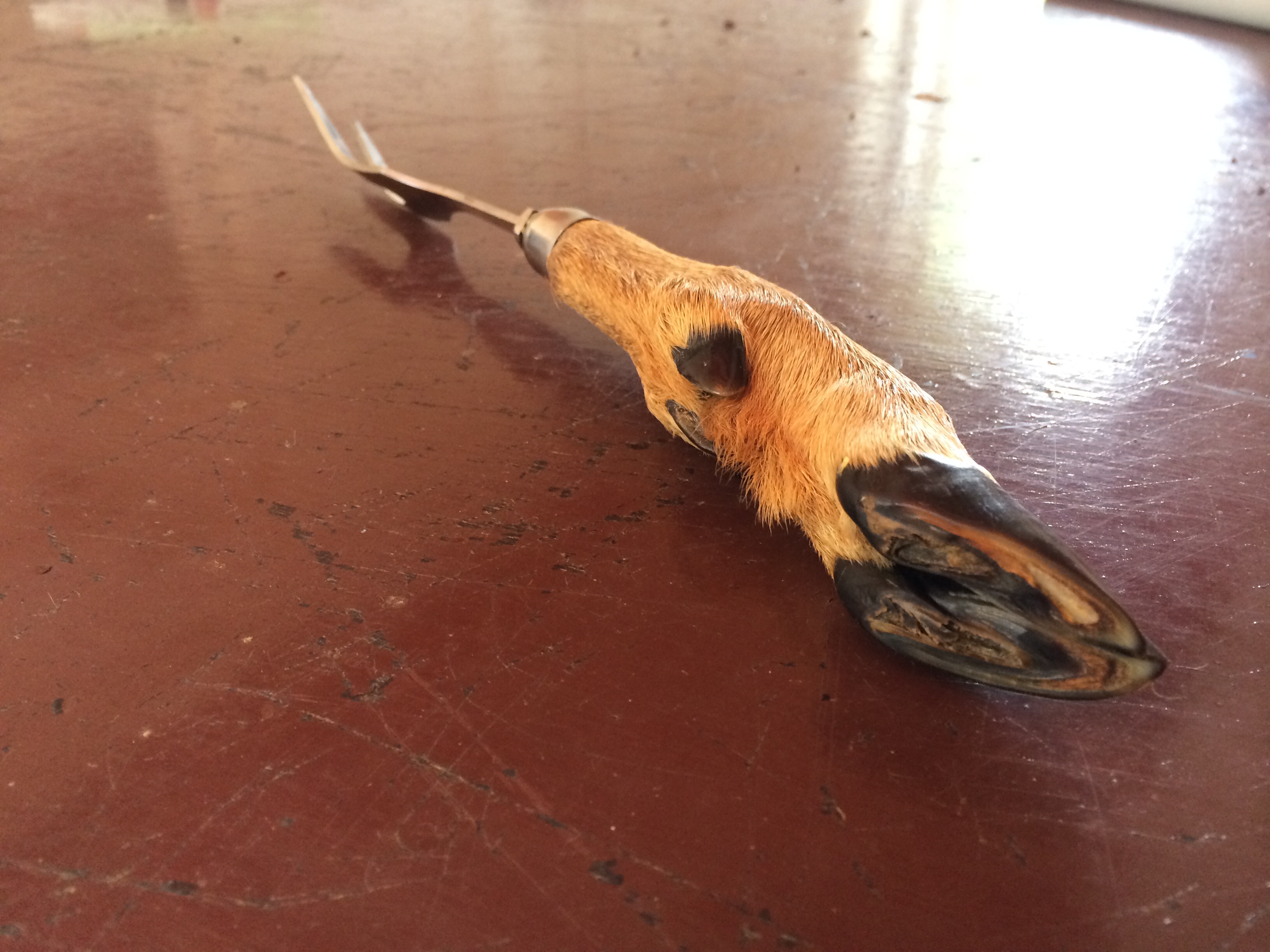
Rita’s mystery object from her “Evocative Object Workshop.”

Rita’s  mystery object from her “Evocative Object Workshop” came with a surprise twist: we’re still not sure what it is. Hoof-fork? One of the many charming (and evocative) mysteries of the Château de Verderonne that inspired our poems, stories, songs, essays, and screenplays.


image

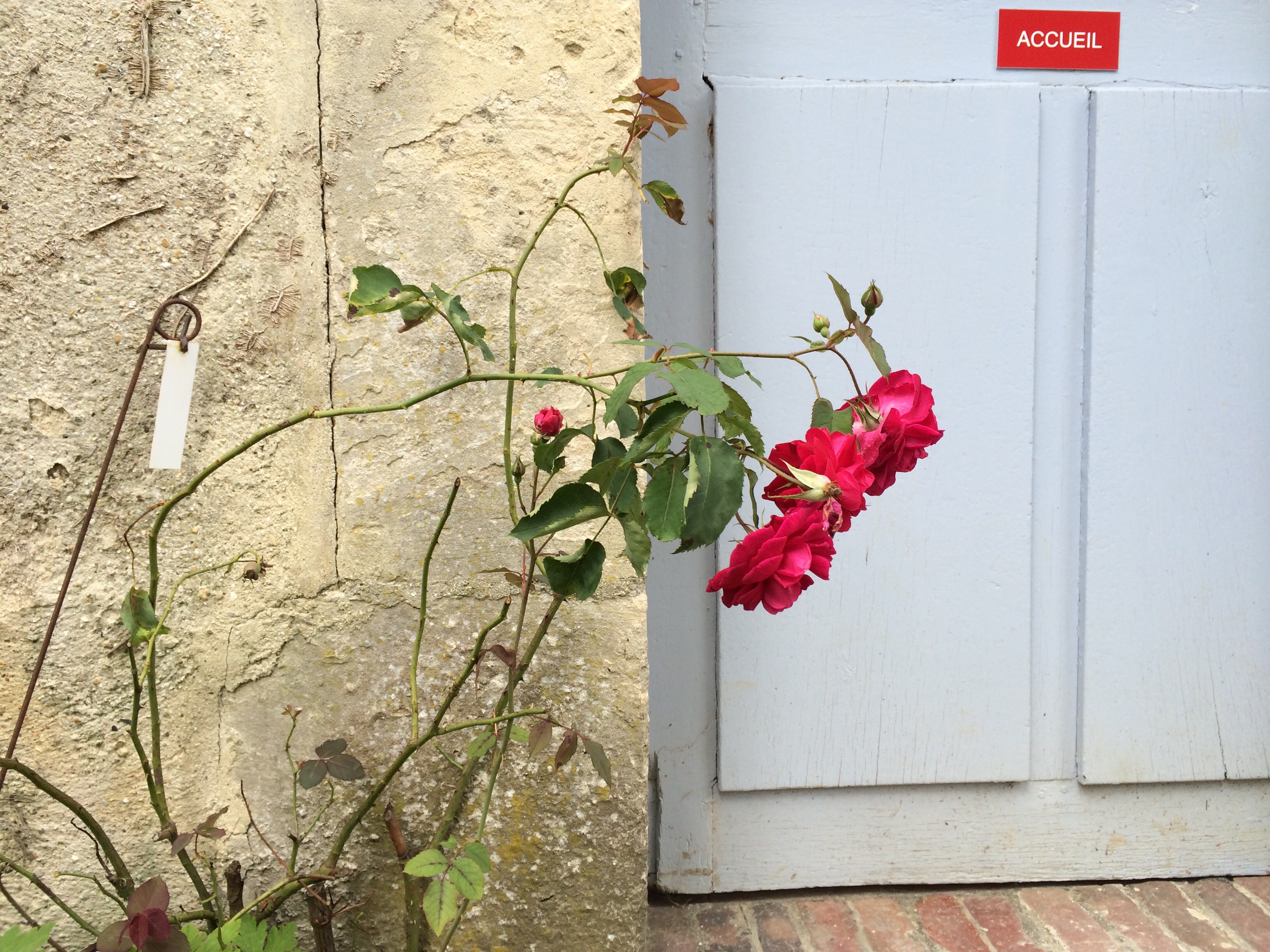
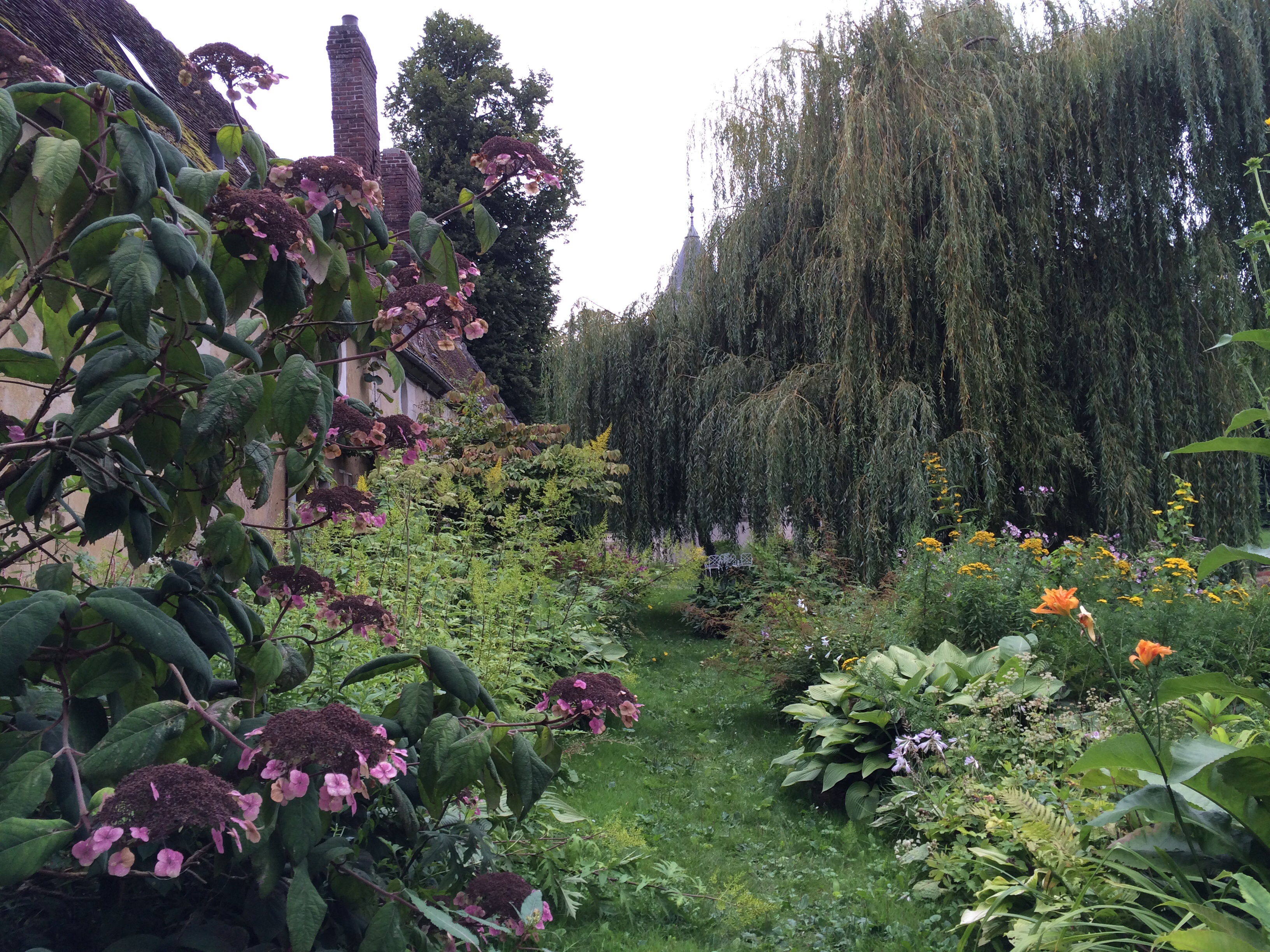
Verderrone, ever-blooming.

A stroll around the gardens helped us choose our own “evocative objects” to write about.

image

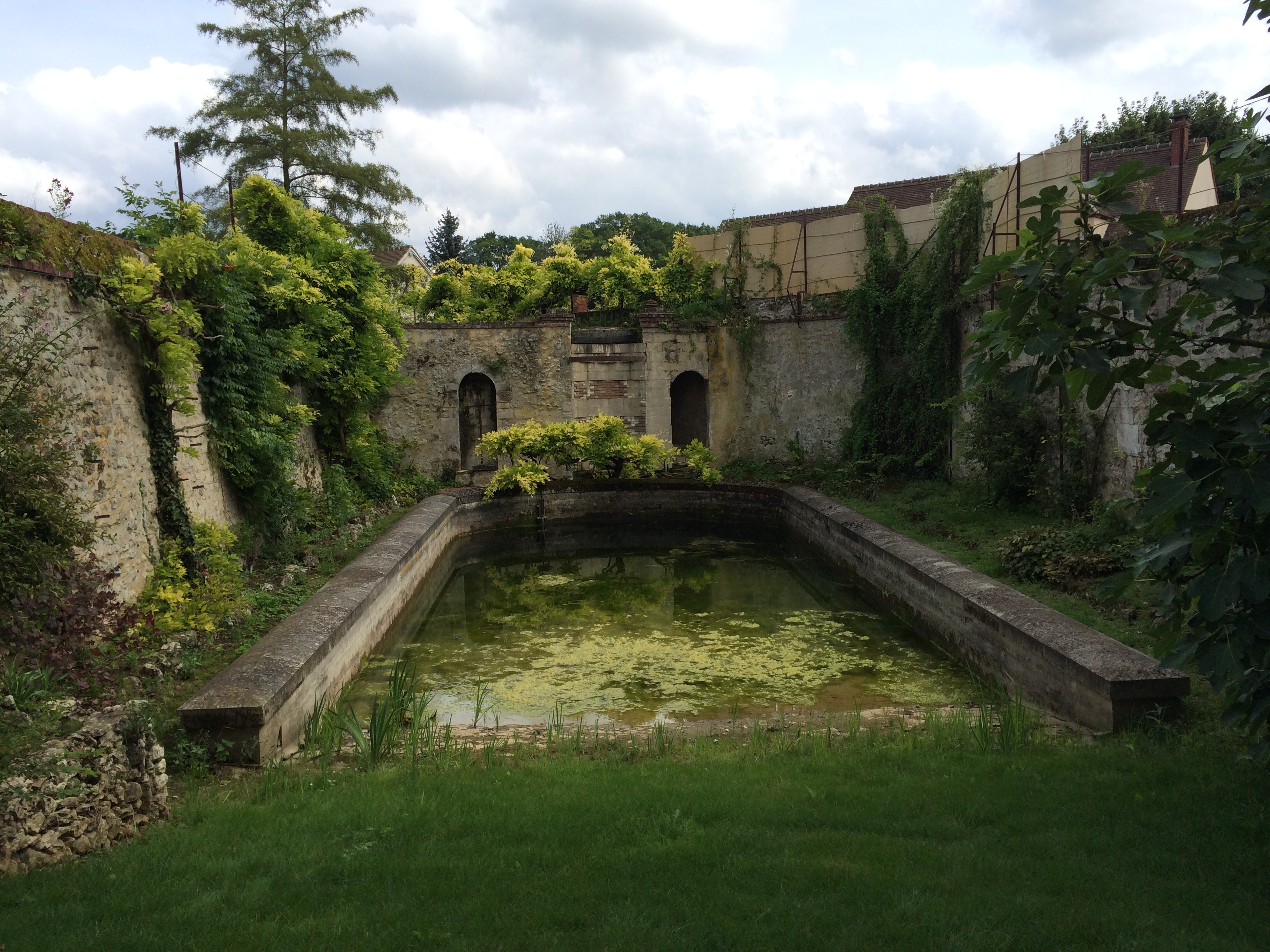
The old horse bath, now teeming with plant life and rustic beauty.


(I chose the old horse bath, now teeming with plant life)

image

A very productive workshop


We really kicked it.

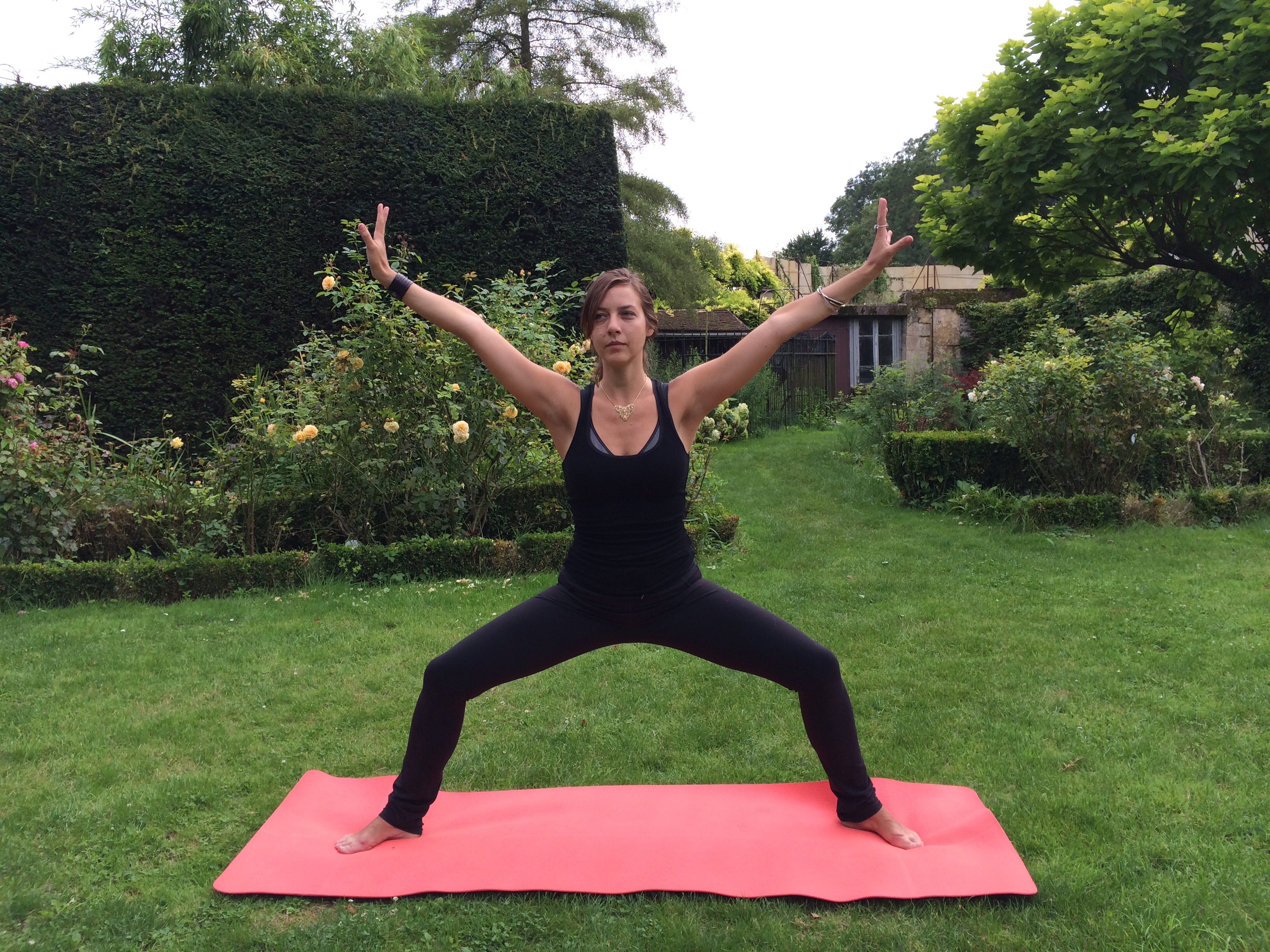
Elissa demonstrating "water fountain"

Elissa demonstrating “water fountain”


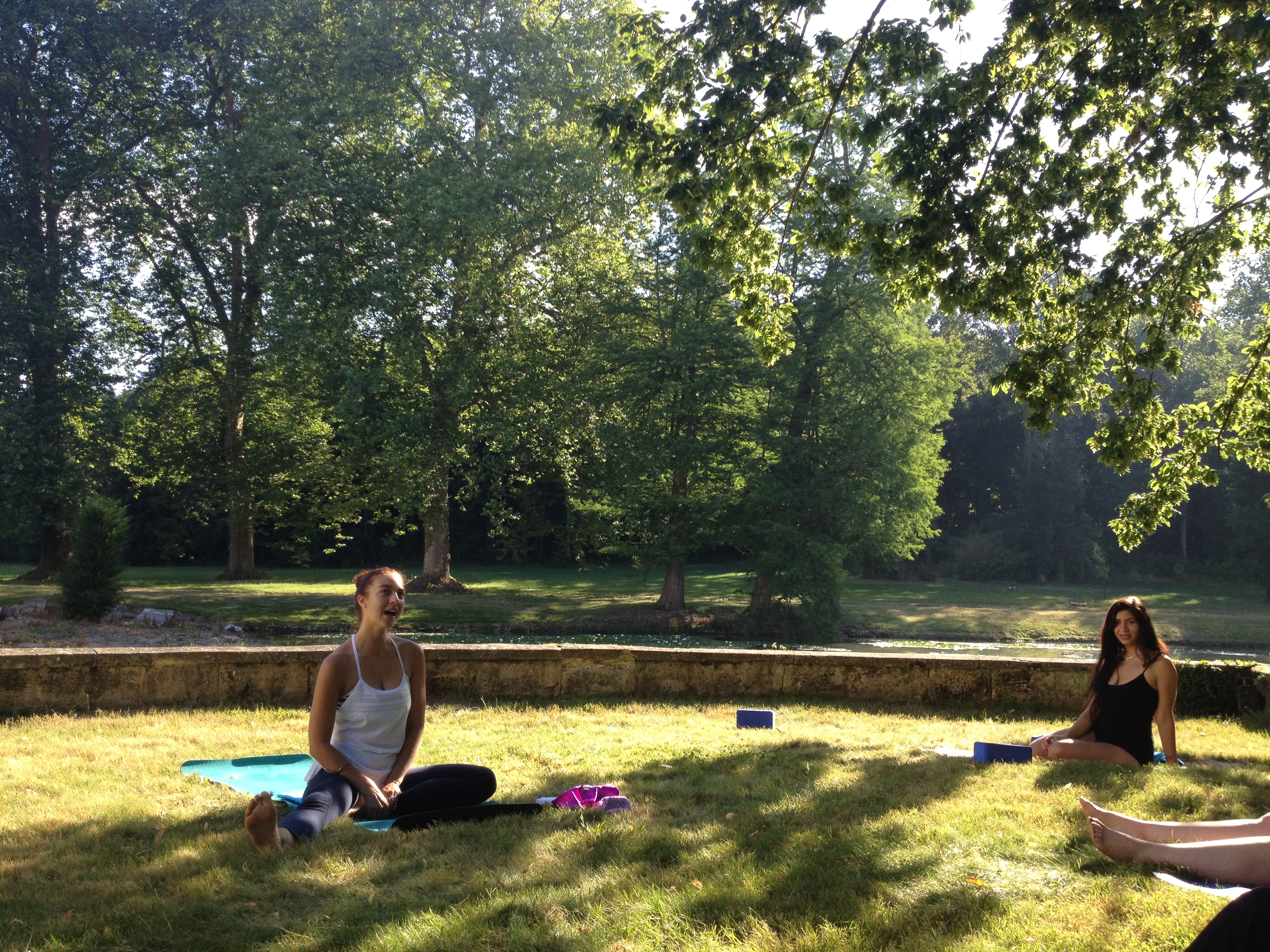
Since our morning yoga was energizing and strengthening in the salon, our evening yoga was cooling and relaxing in the garden. After a good day of creating, relaxing yoga was exactly what we needed. After “water fountain” we tried “chasing the moon.”


The gardens

The gardens

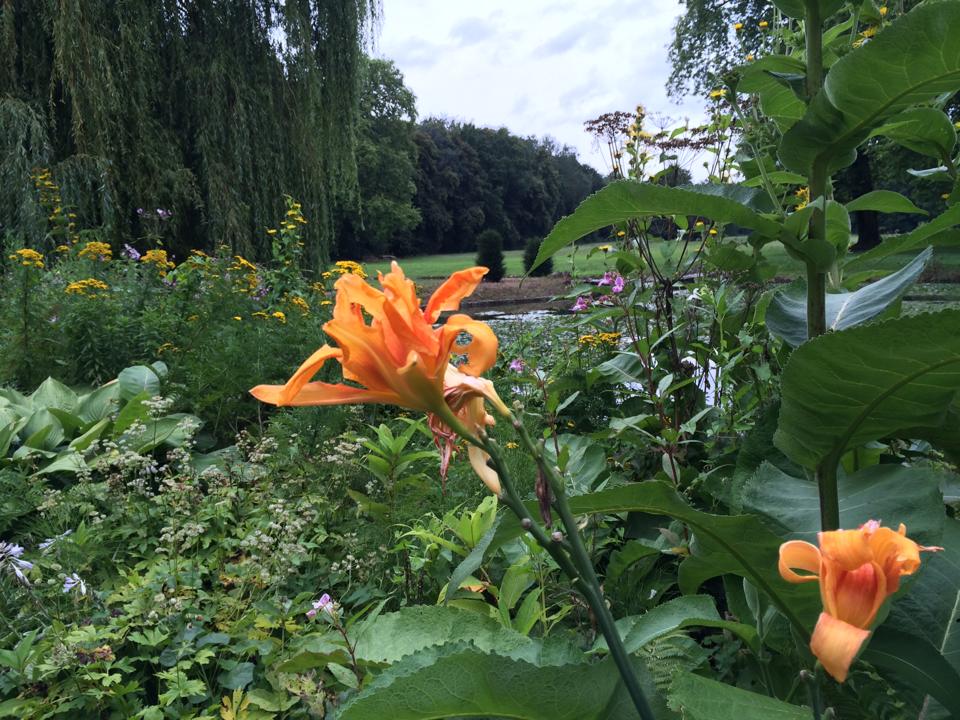
The lilies in the gardens

The lilies in the gardens

Yoga made the walk back through the gardens all the sweeter, especially knowing that dinner (and plum tart for dessert!) would soon be on the table.

In fortune teller mode

In fortune teller mode


And for added inspiration, I’m doing some palm and tarot reading sessions on the side for our wonderful group this summer. Why not look life’s mysteries in the eye?

– Jessica Reidy, CWW Fiction Instructor

August 8 – CWW Classes Begin at the Château de Verderonne

Today was our first full day!  Most of us have just flown in from the USA, the Philippines, England or Germany.  The jet-lag seems to have more or less subsided.  For me, flying into Europe always seems easier than flying out.

Rita lead a terrific writing workshop: Literary taboo and writing contracts.  It’s a great time to set the bar for our writing for the rest of our time here.  We all decided on a realistic writing goal for ourselves.  The idea is that we can check in with our respective writing partners regularly, and they become a reminder of our progress.

Later in the afternoon, we made accordion style journals by folding icy blue paper.  To finish, the journal is tied with a gorgeous ribbon to complete the package.  We used a beautiful variety of ribbons; some hand dyed silk and lots of French-style ribbons in satin and grosgrain.  We all have different ideas on how we will use this journal; for writing stories, recording thoughts, or for watercolor painting. It’s only the beginning!

Victor, our videographer, is also an amazing musician, by the way!  A few writers here are also professional level singers.  Viktor played whatever tune they requested and they set the stage for the rest if us.  We ended up crowded around the table singing.   It was a wonderful way to end the night.

-Elissa Lewis, CWW Yoga Coordinator

August 7 – Bienvenue en France, Mes Amis!

The Cambridge Writers’ Workshop kicked off today.  A two week retreat of writing classes and yoga led by talented teachers in the lush, green countryside town of Verderonne, one hour north of Paris.  Published authors, aspiring novelists, and avid writers have come from other countries just to work on their own literary projects and learn new techniques in word-smithery.

As CWW’s videographer my first order of duty was to pick up participants and escort them back to the Chateau of Verderonne.  Once the last of the participants were picked up from Charles de Gaulle Airport and a quick stop for extra yoga mats, we settled in at the chateau for lunch.  Some participants having traveled more than 6 hours from overseas on a plane took a well deserved nap before orientation to the CWW retreat and the Chateau of Verderonne.

In the afternoon, Rita, Elissa, and I presented the participants with the itinerary for the next two weeks, then everyone met M.  Marié, the propriétaire of the estate of the château.  He gave us a tour of the buildings, beautiful gardens, and calming greenery which we would all inhabit and hopefully being inspired to write about.

As the sun began to set we had dinner and everyone made the rounds, introducing themselves at the table and why they had come.  Each writer had a different reason to join the retreat but what everyone had in common was their love for the written word and desire to sharpen their craft…that and their appreciation of wine,  French wine, mmmmmm ;).  Demain, we begin the craft of writing seminars and workshops, and what better way to start the next day with getting the creative muscles flexing than with a yoga class at 8am.  Namaste.

– Victor Pachas, CWW Multimedia Specialist

Save the Date! Live Blogging the CWW Château de Verderonne Yoga & Writing Retreat (August 7-20, 2014)

2013-07-25 09.23.20Hello CWW followers! From August 7-20, we will be visiting the Château de Verderonne in Picardy, France for our annual Yoga and Writing Retreat. While we’re in the French countryside working on our yoga practice and our writing projects, we will be sharing the experience with all of you.

Check our website during the retreat period to see updates and posts from members on the retreat. You will see pictures, blogs, and other news from France as the trip progresses. You can find out what some of our contributors are doing on the trip, with blog posts from Rita Banerjee, Diana Norma Szokolyai, Elissa Lewis, Jesica Reidy, Megan Tilley, and Victor Pachas.

So join us for live updates from our annual yoga & writing retreat in France, and hope to see you there next year!


New Review by Rita Banerjee: Paging Ms. Marvel: The Perks & Perils of Creating an Islamic, Feminist Superhero

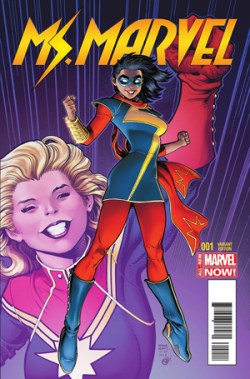
Kamala_KhanRita Banerjee’s review of the new Ms. Marvel series, “Paging Ms. Marvel: The Perks and Perils of Creating an Islamic, Feminist Superhero,” has just been published on Jaggery: A DesiLit Arts and Literature Journal.  In the review, Rita Banerjee writes:

“The new Ms. Marvel comic series focuses on the trials and tribulations of Kamala Khan, a Muslim Pakistani-American high school student from Jersey City. The series is a reboot of the original Ms. Marvel comics made famous by the character of Carol Danvers, who debuted as Ms. Marvel in 1977 and eventually rose to become Captain Marvel in 2012. This new Ms. Marvel, written by G. Willow Wilson and inspired by the adolescence of Marvel Comics editor Sana Amanat, is full of surprises—from sly observations on cultural stereotypes to explorations of geek culture and the fan fiction–verse to redefining concepts of female beauty and empowerment. Or as Amanat writes at the end of the premiere issue of Ms. Marvel, “this book is a victory for all the misfits in the world,” as embodied in the “loveable, awkward, fiercely independent” Kamala. But in attempting to create an Islamic feminist superhero in the guise of an adorable and awkward teenager, Kamala Khan, the new Ms. Marvel has its fair share of both perks and perils.”  Check out the full review here.

CWW’s Diana Norma Szokolyai Performs with Parallel Sonic at Barbes

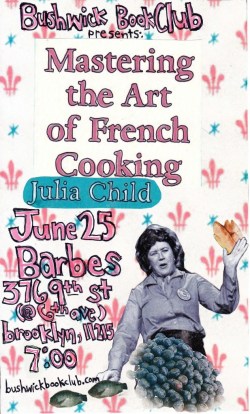
bbc_child1-617x1024Parallel Sonic (Diana Norma Szokolyai, Dennis Shafer Teerapat Gof Parnmongkol and Jessie Nelson) will be playing as part of the Bushwick Book Club at Barbes on June 25.  The Bushwick BookClub chooses a different book every month and invites performing artists to create a performance related to the work. Tonight, come hang out with us for and see the different experimental performances based on Julia Child’s book, Mastering the Art of French Cooking.

Wed. June 25, 2014 7p.m.
Parallel Sonic at Bushwick BookClub
Barbes, 376 9th St, Brooklyn, NY (at 6th ave and 9th st)

CWW Creative Director, Rita Banerjee, interviewed in Speaking of Marvels for her novella A Night with Kali

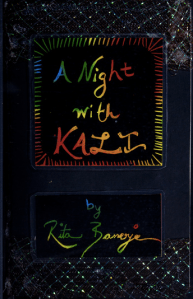
KaliCoverWilliam Kelley Woolfitt, who runs Speaking of Marvels, a forum for interviews about chapbooks, novellas, and other short form literature, recently sat down to interview Rita Banerjee, the Cambridge Writers’ Workshop Executive Creative Director, about her novella, A Night with Kali (Brooklyn Art House Co-op, 2011).  In the interview, Woolfit asked Rita a series of questions from which were her favorite chapbooks and novellas, to questions on her current writing projects, and her advice to writers working on new projects and book manuscripts.  You can read the full interview here.  Here is a selection of questions from the interview:

What’s your novella about?

A Night with Kali is at its core a coming-of-age ghost story. The novella is about a taxi-driver, Tamal-da, who explains why he left his fishing village near Krishnapur, West Bengal, to work on the dirty and crooked streets of Kolkata. Against an oddly purple mid-day sky, the narration opens on the rain-clogged streets of Kolkata, where Tamal’s car gets stuck in a flood. To pass the time and wait for help, he begins to tell his passenger of how he came to this city and his past, which is filled inexplicably with undead things.

What are some of your favorite novellas? How did they influence your writing or your desire to make a novella of your own?

Novellas seem to capture a magical middle ground between the poignancy and sharp edginess of the short story and the more decadent, sprawling ruminations available to novelists.  Some of my favorite novellas include Fyodor Dostoevsky’s Notes from Underground, Leo Tolstoy’s Family Happiness, Goethe’s The Sorrows of Young Werther, Joseph Conrad’s The Heart of Darkness, and Thomas Pynchon’s The Crying of Lot 49.  In Dostoevsky’s novella, the singular psychosis and at times, irredeemable actions of the narrator, an extremely likeable anti-hero, propel the narration forward.  In Tolstoy and Goethe’s novellas, both authors emphasize and exploit the desires and emotional uncertainties of their central characters to hook in the reader. And Conrad and Pynchon excel at exploring how objects, symbols, and terrain can reflect and provide commentary on the psychology and motives of characters.

What advice would you offer to an aspiring novella author?

First, read as much as you can, and don’t be ashamed to read those texts others may not consider “literature.”  Look back at the stories, essays, films, poems, speeches, etc., that inspired you the most.  Figure out what made them so effective.  Did it have something to do with the structure of the story?  The emotional authenticity and dynamism of certain characters?  The comedy and turn of events?  The ability of language to capture a lyrical moment persuasively and succinctly?  Figure out why you are drawn to certain narrative and lyrical works, analyze these texts for elements of their style, structure, and content, and from what you’ve learned, see if you can do it. Go ahead and experiment, grab some coffee or brandy if you need it, and write, write, write until you get it right.

excerpt from A Night with Kali

“By the time I reached the old Kali Mandir in the woods, I had lost sight of the shadowy white figure completely.  Walking by the main gate to the temple, I stopped in front of the arched entrance way.  The priest had not gotten up yet and had not opened the doors this early in the morning.  But through the grilled gates, I could see into the main temple hall, which rose majestically in the middle of the forest canopy.  Looking in, I saw the figure of Kali standing there, in the middle of the hall, with her wide and sinister grin. Her tongue was hanging out and in her hands, she carried a variety of weapons including a machete in one and a knot of severed heads in another.  Across her lithe, blue naked body a garland of skulls draped lightly over her breasts.  A short chain-mail skirt with links in the shape of human hands hiked up one of her hips as she stood with her legs parted wide on the body of her husband, Shiva.  Her tongue, thus, rolled down of its own accord.  Bracketed against the moonlight, she made a ferocious figure.  But there was something protective and eternal about her, too.  There was an air of mischief in her smile and the way her body posed provocatively for the spectator…

Watching the stationary figure watch me, I gave her a quick morning prayer… In the moonlight, the statue’s eyes glittered back at me.”

Full interview available at Speaking of Marvels: Rita Banerjee’s A Night with Kali

RBRita Banerjee received her PhD in Comparative Literature from Harvard.  Her writing has been published in Poets for Living Waters, The New Renaissance, The Fiction Project, Catamaran, The Crab Creek Review, and Amethyst Arsenic. Her first collection of poems, Cracklers at Night, received First Honorable Mention for Best Poetry Book of 2011-2012 at the Los Angeles Book Festival and her novella, A Night with Kali, was digitized by the Brooklyn Art-house Co-op.  She is Executive Creative Director of the Cambridge Writers’ Workshop, and her writing has been featured on VIDA: Women in Literary Arts and on KBOO Radio’s APA Compass.  You can follow her work at ritabanerjee.com or on Twitter @Rita_Banerjee


Twenty “Gypsy” Women You Should Be Reading by VIDA: Women in Literary Arts including our own Diana Norma Szkoloyai

MathildeVonThieleFor June, Roma and Traveller History Month, Jessica Reidy of VIDA: Women in the Literary Arts, has written a must-read essay, “Twenty ‘Gypsy’ Women You Should be Reading,” featuring the Cambridge Writers’ Workshop Executive Artistic Director, Diana Norma Szokolyai.  In her essay, Reidy writes:

June is Roma and Traveller History Month, which began as an effort to educate people about these culturally rich, diverse, vibrant, oppressed, underrepresented, and misunderstood ethnic groups most commonly referred to as “Gypsies.” Let’s start with the word. Gypsy: the less-accurate term that gadjé (Rromanes for non-Romani people) use to refer to Roma, an ethnic group originating in India around the 11th century. After leaving India, Roma traveled West and were met by hostile, xenophobic Europeans, and so became nomadic due to persecution. Although many Roma are settled today and live all over the world, discrimination, hate crimes, and apartheid are ever-present. Travellers, sometimes known as “Tinkers,” are also traditionally nomadic and historically and presently suffer the same stigma and oppression that Roma suffer; however, they are of Irish ethnic origin and have their own culture and language and tend to live in Ireland and the U.K.

Over time, Gypsy became a racial slur, especially in the lowercase “gypsy,” and antigypsyist language is normalized in many languages. In American-English, for example, antigypsyist slurs are idiomatic (eg: That shopkeeper gypped me!). Racial slurs for Roma and Travellers include “Gypsy,” Gyppo,” “Gyp,” and for Travellers specifically, “Pikey” and “Knacker.” Despite this, Gypsy is often appropriated by gadjé and misused to describe anything occult, whimsical, sexual, or criminal, which both perpetuates harmful stereotypes and insultingly implies that “being Gypsy” is a lifestyle choice or a state of mind or spirit. This is particularly problematic considering the current global Romani and Traveller human rights crisis. However, some Roma and Travellers choose to reclaim Gypsy as an act of linguistic and identity empowerment, whereas some Roma, especially of the older generations (like my grandmother) just prefer Gypsy. If you aren’t Romani or Traveller, use Roma and Romani or Traveller instead of Gypsy or any other slurs, and if you are Romani or Traveller, you’re free to reclaim or shun the word Gypsy as you see fit.

DNSDiana Norma Szokolyai—is a young Hungarian-American writer/performance artist of Hungarian and Romani descent. She is Executive Artistic Director of Cambridge Writers’ Workshop, where she teaches and organizes Writing and Yoga retreats in France for adult writers. Her writing on literary communities was recently the subject of a monthly feature on HER KIND by VIDA: Women in the Literary Arts and Quail Bell Magazine. She author of the poetry collections Parallel Sparrows (honorable mention for Best Poetry Book in the 2014 Paris Book Festival) and Roses in the Snow (first runner-up Best Poetry Book at the 2009 DIY Book Festival). In 2011, The Brooklyn Art House Co-op digitized her handwritten chapbook, Blue Beard Remixed & Poems, written for The Fiction Project. Her writing has also been published in Lyre Lyre, the front page of The Boston Globe, Dr. Hurley’s Snake Oil Cure, Teachers as Writers, Polarity, Up the Staircase, Belltower & the Beach, Human Rights News, and Area Zinc Art Magazine, among others. She has released recordings of audio poetry in collaboration with musicians Dennis Shafer, Sebastian Wesman, David Krebs, Peter James, Howl Quartet, and Project 5 a.m. She also co-curates a poetry-music series, performs in CHAGALL PAC and is an interdisciplinary performance artist with the Brooklyn Soundpainting Ensemble. Her interdisciplinary work has been called “avant-garde” by The Boston Globe. She lives in Brooklyn, NY and was educated at Harvard, UConn, AMI, La Sorbonne Paris III and IV, and in her grandmother’s kitchen in Hungary. Website: http://diananorma.com/; Twitter handle: @DNSWrites

Read Jessica Reidy’s full essay for VIDA: Women in Literary Arts here.

Meet Alex Carrigan, our new Editorial and Public Relations Intern

alex quail bellWe, at the Cambridge Writers’ Workshop, are excited to announce two new members of the CWW team.  Second up is Alex Carrigan, our new Editorial and Public Relations intern from Virginia.  Here’s a bit more about Alex:

Alex Carrigan is a recent college grad hailing from Newport News, Virginia. Growing up, Alex was very much drawn to media, spending a lot of time reading books and watching television and movies. As he got older, Alex began to spend more time researching media and learning more about the various books, shows, and films he was exposed to.  In high school, Alex began to take a turn more towards his future goals. He took classes on studying film and creative writing and became more interested in the fields. He was accepted to Virginia Commonwealth University in 2010 and moved to Richmond, Virginia to attend the school.

At VCU, Alex received a major in print/online journalism and a minor in world cinema. While his interests and career plans changed radically in college, Alex did discover that he wants to live a life engaged in artistic passions, where he could meet and engage with creative individuals and write about them. It was in this time that Alex decided to try and merging his interests, using his degrees in order to try and work for an arts publication or publishing group.

Alex first got a taste for the literary scene when he joined a literary journal called Poictesme in 2010. In Poictesme, Alex got to read poetry and prose submitted by students, critique them, then help create an annual publication showing the best of VCU student art and literature. He stuck with the group all through his college career, even obtaining the rank of deputy editor-in-chief from 2012-2014. Because of changes within Poictesme, Alex and the editor got to go to AWP 2014 in Seattle in order to promote Poictesme, attend panels, and prowl the book fair. It was at the book fair that Alex met Cambridge Writers Workshop and passed along his resume. The rest is history.

Alex is excited to be the new Editorial and PR intern for Cambridge. He hopes to help promote the group online and assist in the various projects of the group. He can also be followed on his blog at carriganak.wordpress.com. He also can be followed on Twitter @carriganak and his Facebook page “Alex K. Carrigan, Journalist.” He is also the staff film reviewer for Quail Bell Magazine and has articles published regularly there.

Meet Megan Tilley, our new Editing & Communications Intern

tilley_megan150We, at the Cambridge Writers’ Workshop, are excited to announce two new members of the CWW team.  First up is Megan Tilley is our new Editing and Communications Intern and she joins us from Florida.  Here’s a bit more about Megan & her work in creative writing:

My name is Megan Tilley, and I’m one of the new interns. I’m a recent graduate from Florida State University with a degree in Creative Writing. I’ve been published in The Rectangle, The Kudzu Review, and Wiley Writer’s online podcast. I was a senior editor at Live Music Media for three years, and also edited for The Kudzu Review. Writing and editing has always been my passion, and I’m excited to be able to expand my experience with editing, among other things, while working with the Cambridge Writers’  Workshop.