Cambridge Writers’ Workshop Named One of BookSparks’s 10 Favorite Writing Retreats Around the World

BookSparksWe are thrilled to be named one of BookSparks’s 10 Favorite Writing Retreats Around the World! Crystal Patriarche writes of our Spring in Newport, Rhode Island Yoga & Writing Retreat:

“Have you always daydreamed of charming coastal life on Rhode Island but never had a chance to experience it firsthand? Here is your glorious, picturesque and everything-you-ever-dreamed-of chance. Nestled directly on the coast with plenty of time for sailboat watching, this stunning location will surely inspire your greatest summer hit (especially if you’re a beach-read type of author).

We expect you to stop reading now and to book your dream retreat immediately. Go ahead; you know you want it.”

Join the Cambridge Writers’ Workshop 2016 Summer in Barcelona and South of France Writing Retreat (July 18-26, 2016) and Summer in Granada, Spain Writing Retreat (July 28-August 5, 2016).  Our featured 2016 Summer writing faculty includes Harvard Director of Creative Writing Bret Anthony Johnston, Guggenheim-award winning essayist and nonfiction writer David Shields, novelist Alexander Chee, poets Rita Banerjee and Diana Norma Szokolyai, and yoga instructor Elissa Lewis.  Sign up for the retreats at cww.submittable.com by May 30, 2016, and apply for scholarships by June 10, 2016!

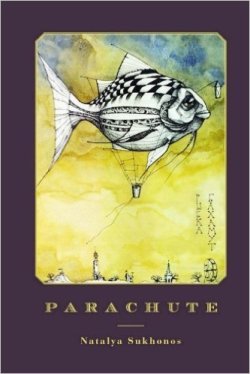
Parachute by Natalya Sukhonos – Book Launch

Parachute-NSCambridge Writers’ Workshop affliate and poet Natalya Sukhonoss new book of poems is a must read! Of the her new collection, Robert Pinsky writes:

“The poems of Parachute have an engaging, distinctive way of combining directness with invention: Natalya Sukhonos’s imagination is attentive.”

Natalya Sukhonos was born in Odessa, Ukraine and immigrated to New York City at the age of nine. She is bilingual in Russian and English and also speaks Spanish, French, and Portuguese. Natalya has a PhD in Comparative Literature from Harvard University and teaches in the Program for Writing and Rhetoric at Stanford University. Her poems are published by Middle Gray Magazine, Really System, Emerge Literary Journal, cahoodalodaling, Yellow Medicine Review, Empty Sink Publishing, and Dr. Hurley’s Snake-Oil Cure. Sukhonos was nominated for the Pushcart Prize in 2015 and the Best New Poets Anthology of 2015. She lives in San Francisco with her husband Ian and her daughter Naomi. Her chapbook Parachute was published in May 2016 by Aldrich Press of Kelsay Books.


Scholarships Available for 2016 Summer in Barcelona & South of France & Summer in Granada Writing Retreats

The Cambridge Writers’ Workshop is offering scholarships for student writers, diversity fellows, and writers who are parents for our Summer 2016 Writing Retreats.  Join the CWW 2016 Summer in Barcelona and South of France Writing Retreat (July 18-26, 2016) and Summer in Granada, Spain Writing Retreat (July 28-August 5, 2016).  Our featured 2016 Summer writing faculty includes Harvard Director of Creative Writing Bret Anthony Johnston, Guggenheim-award winning essayist and nonfiction writer David Shields, novelist Alexander Chee, poets Rita Banerjee and Diana Norma Szokolyai, and yoga instructor Elissa Lewis.

Limited scholarships of $500-$1500 are available for each program.   Scholarships are available for student writers (for undergraduate or graduate students in literary fields), diversity fellows (for writers of color and writers from marginalized communities), and for writers who are parents.  The deadline to apply is June 10, 2016.  Applications are currently open at cww.submittable.com.  

To apply for a scholarship, please submit a scholarship application here, explaining who you are as a writer, which program you are interested in, and how you would benefit from the scholarship.  Please also submit a writing portfolio and 2 references to either the Summer in Barcelona and South of France Writing Retreat or the Summer in Granada Retreat by June 10, 2016 to complete your application.application.

“Narrative as Provocation” by Rita Banerjee featured on The Poetry Foundation

poetry_foundationThe Poetry Foundation has featured Rita Banerjee’s article, “Narrative as Provocation” on their Harriet: A Poetry Blog today.  The Poetry Foundation writes:

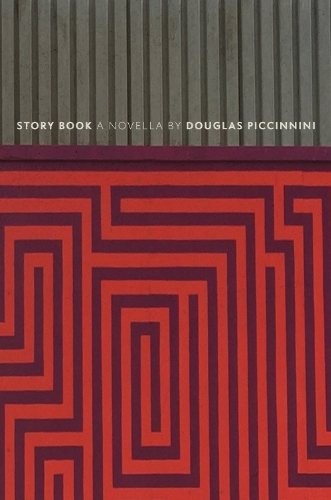
Poet Douglas Piccinnini’s Story Book: A Novella (The Cultural Society, 2015) “suspends and electrifies narration mid-creation,” writes Rita Banerjee in a review of the work at LA Review of Books. “Piccinnini’s training as a poet illuminates his work, the structure of his prose echoing the long-lines of Ammons and Walt Whitman,” she writes.  More:

“These rolling lines are less biting than Ginsberg’s, but through a Stein–like interplay of sense and nonsense, his diction evokes vulnerability and makes evident the emotional, psychological, and cultural stakes involved. In this space of confusion, syntax and grammar break down as the speaker attempts to reformulate his own expression and empower his own disabled tongue. As language learns to articulate itself, ready-made forms of cultural capital — such as the privilege of being an American or speaking in the neo-colonizing tongue of English — are challenged by the speaker’s very inability to give them significance or import. In this Chapter 1 and in others, the parameters of the speaker’s life, of his identity, and of his sexuality are called into question by the birth and death of language.”

Read more about the The Poetry Foundation’s post on “Narrative as Provocation” here.

“Narrative as Provocation” by Rita Banerjee – Los Angeles Review of Books

LARB

In this week’s edition of the Los Angeles Review of Books, Rita Banerjee reviews Douglas Piccinnini’s Story Book: A Novella.  She writes:

DOUGLAS PICCINNINI’S Story Book: A Novella suspends and electrifies narration mid-creation. Story Book explores narratives of self-imposed amnesia, bloody encounters at home and on the road, Oedipal rage, suburban cocoons and the anxiety of marriage, male sexuality and therapy sessions gone awry, Catholic school and homosociality, confrontations with love, death, and surveillance, and of course, the purported cure-all of worst-case scenario guides. The “novella” is composed of a series of short stories which all begin with the title, “Chapter 1.” Each Chapter 1, laced with metatextuality, develops its own existential confusions before arriving at a moment of implosion or interruption.

Story Book is thus about a modern man, a modern artist, and a modern thinker disabled by language. The ghosts of Gertrude Stein, A. R. Ammons, and Samuel Beckett haunt Piccinnini’s prose as each chapter performs its role as self-confrontation or self-interview. Piccinnini’s power as a writer emerges when his disabled speaker learns how to articulate himself, and how to use the very language that hinders his understanding of himself, in order to climb out of existential dilemmas and tailspins…

Another Story-Book“Chapter 1” begins with the simple provocation: “What did I love?” In this chapter, the speaker sits alone at his computer trying to decipher the meaning of his relationships with women and his odd infatuation with words. He ponders the difficulty of writing an address, a story in which the perspectives of the “you” and “I” combine and trade places. He considers how easily days of productivity disappear as the writer attempts to get a sense of urgency on paper. He writes, “I feel the quotation of an afternoon, emptied — empty before me,” and then reveals:

This is the third time I’ve lived with a woman.

I’ve been in love before. I’ve been loved. I’ve also wanted to have sex with the same person over and over again but that is not love, I think.

Sex can be love. But love and sex are different, obviously. Is it obvious? Sometimes you’ll want to have sex with someone you don’t know and never want to know. You’ll find yourself destroying a complete stranger in some compromising position. It would seem to be some biological failure, love and how we live.

This is the first time I’ve been married. I love my wife. I read recently, “Love is a condition of understanding.” I’m quoting from memory. It sounds like something you might read anywhere.

A nagging sense of quotation, of living a life built on quotation marks haunts the novella. The speakers of his stories are troubled by the thought that their very human existence and their desires for creative expression have already been written and have found a home in someone else’s prose. The fear of living a life already recorded and already performed by literary archetypes creates a start-and-stop motion in Piccinnini’s prose.

Read the rest of the review on the Los Angeles Review of Books.

RitaBanerjeeRita Banerjee received her doctorate in Comparative Literature from Harvard and her MFA in Creative Writing from the University of Washington.  Her writing has appeared in Electric Literature, VIDA: Women in Literary Arts, Queen Mob’s Tea House, Riot Grrrl Magazine, Poets for Living Waters, The Fiction Project, Objet d’Art, and on KBOO Radio’s APA Compass in Portland, Oregon. Her first collection of poems, Cracklers at Night, received First Honorable Mention for Best Poetry Book of 2011-2012 at the Los Angeles Book Festival, and her novella, A Night with Kali, is forthcoming from Spider Road Press in October 2016. Creative Director of the Cambridge Writers’ Workshop, she is currently working on a novel and a book of lyric essays.

The Queen of the Night by Alexander Chee: A Review by Alex Carrigan

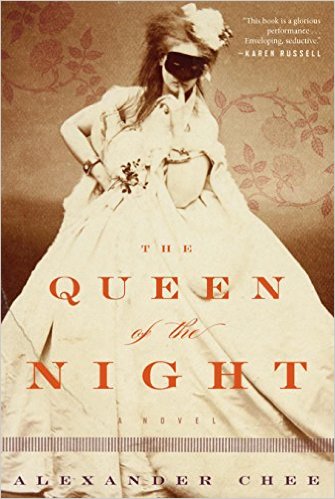
QueenoftheNightWhat makes a great opera? Is it the music? The costumes? The story? Or can it become great for the performer who helms the leading role? Novelist and CWW 2016 Summer in Granada Writing Retreat faculty member Alexander Chee’s latest work, The Queen of the Night is a historical fiction novel that follows Lilliet Berne, a Parisian opera sensation in the late 19th century. Lilliet receives an offer for an original role, an honor most opera performers only dream of. However, when she discovers that the opera is based heavily on her past, she embarks on a journey to discover how the work came to be. The novel traces Lilliet’s journey, beginning with her childhood as an American frontiersman’s daughter. Readers watch as Lilliet joins a circus and a brothel, serves the Empress of France, studies under opera legends, and ultimately arrives at her current status as one of France’s most famous opera singers.

Chee’s novel is a historical epic, and Lilliet is a character in the vein of a Dickens protagonist. Her life takes so many turns, and she is forced to navigate using her wit and talent for assuming new roles.

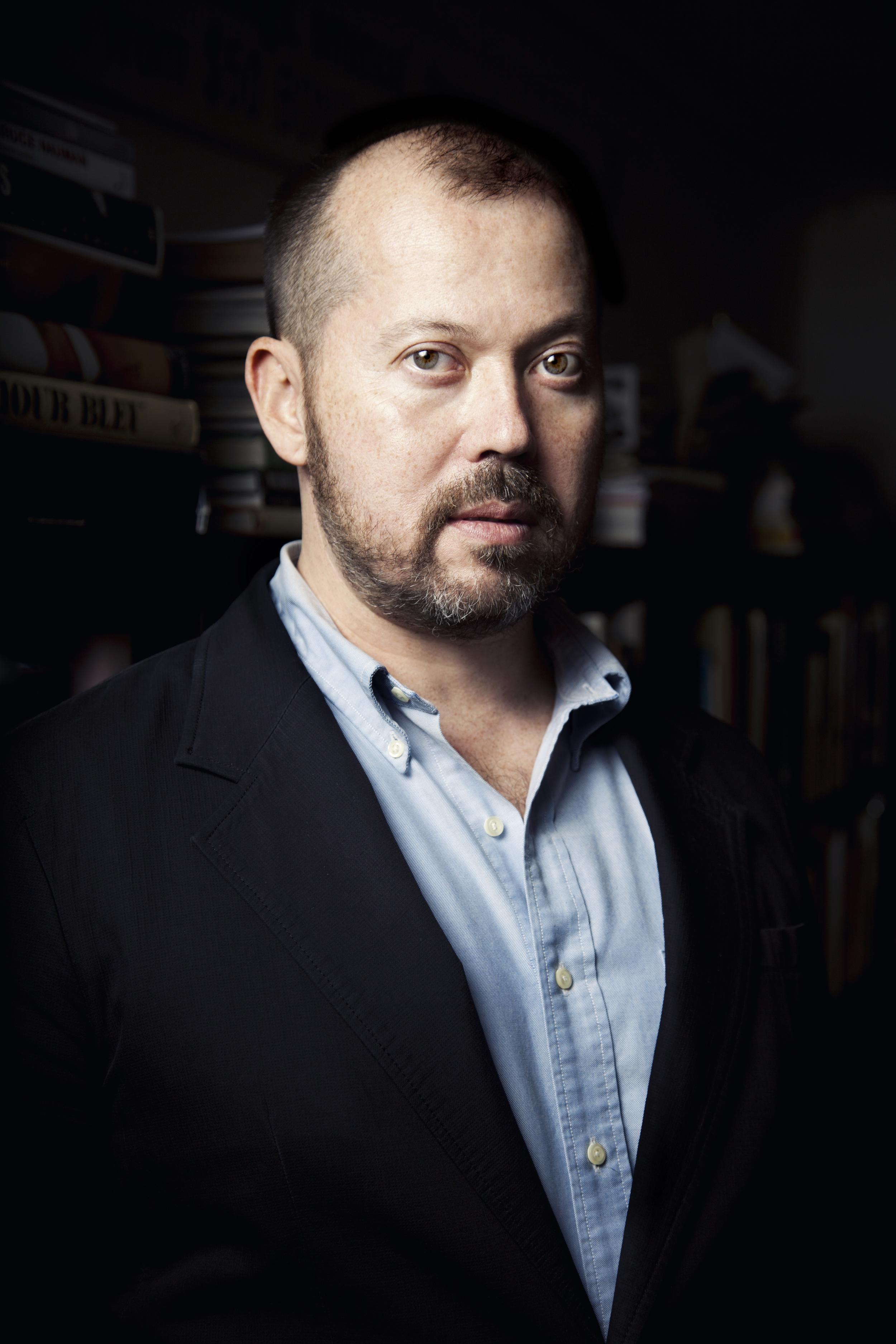
alexandercheeThough this shape-shifting proves convenient, Lilliet struggles to discern how much control she has over any one of her personas. While she cycles easily through roles, she finds herself influenced, even dominated, by others, and most of the conflict in the book comes from run-ins with authority figures. The most dangerous is a tenor singer who tries to morph Lilliet into the opera legend of his fantasies. Lilliet, dubbed a Falcon soprano due to her unique and potentially temporary style of singing, is often associated with falcons and other avian imagery. Lilliet is a master at “flying” from dangerous people and situations and finding a way to survive.

It is true that Chee’s novel is a hefty read, but I never found myself losing interest. I found Lilliet fascinating–multidimensional and endowed with a unique voice.  She is strong and clever, but she also possesses very human faults.

I also admire the way Chee conveyed opera in the story. It can be difficult to communicate performance, which relies so heavily on visual and audio, in prose. However, Chee’s book manages to convey all the operas and performances via detailed imagery and clever diction. Even the more abstract operas were so well fleshed as to remind me of a George Méliès film.  I only wanted to see them realized on the stage.

Overall, The Queen of the Night is a wonderful novel. Liliette is a strong and fascinating character, and Chee tells her story in precise, rich prose. I am very excited to read more Alexander Chee, and I am very excited for the Historical Fiction course he will be teaching at our Granada retreat.

–Alex Carrigan, CWW Managing Intern

For more information on Alexander Chee and The Queen of the Night, visit his website here.

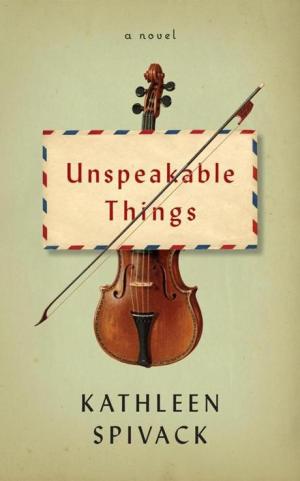
Unspeakable Things by Kathleen Spivack: A Review by Alex Carrigan

9780385353960Last year, the Syrian refugee crisis became a point of international discussion.  The Syrian Civil War has seen millions of Syrians displaced and fleeing into neighboring countries. In between news reports of nations closing their borders and celebrities advocating for refugee aid, we heard stories about the people who made it out. We heard about what and who they lost escaping the war zone, the challenges they faced fleeing the country, and the difficulties of starting new lives in different nations.

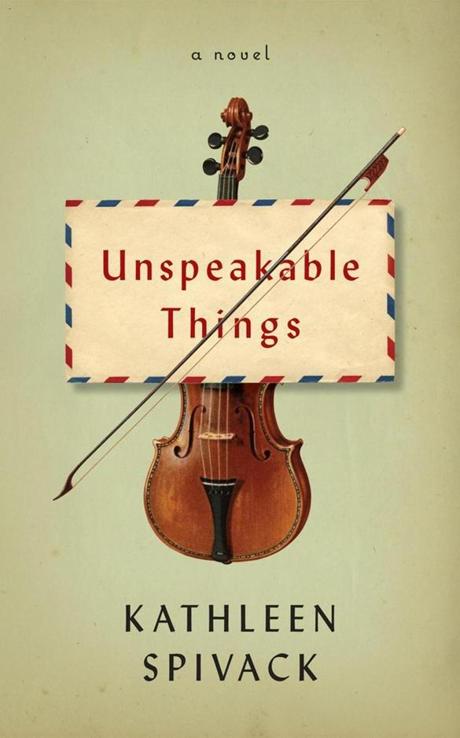
When I picked up the newest book from poet, educator, former CWW faculty member, and CREDO contributor Kathleen Spivack, I found myself entrenched in a different mass exodus, though one of equal gravity. Unspeakable Things, Spivack’s first novel, follows several characters who escaped World War II-Europe and are attempting to start anew in New York City. These characters include a beautiful and physically deformed former countess, her Esperanto-speaking cousin, his institutionalized wife, his granddaughter who is going through a physical and emotional crisis, a pediatrician who dabbles in genetic experiments for his Führer, and a string quartet who were driven out of their home following a disastrous concert and the loss of their little fingers. These characters influence each other’s tales, as the unspeakable events of the War continue to effect them.

Spivack’s characters are united by an almost obsessive interest in memory and the past.  Some characters are haunted by their pasts, some still bear the marks of terrible events, and others embrace the past as part of a progression. What differentiates Spivack’s characters on a thematic level is how they choose to let the past affect them–whether it will be saving, destructive, or something else.
6odLzoK-ReQPwOcvZbfWrdFOulc08fdeMOZ6m28nwOUSpivack imbues her tale with a lovely attention to music. For many of Spivack’s characters–the Tolstoi Quartet (so named because they consider Tolstoi the most universal writer, which I love), for example– music is life. These musicians once lived together, sharing beds with their instruments while their wives slept on the floor. When they lose their little fingers and the ability to play as a result, they are only concerned about steadying their instruments. Additionally, the institutionalized woman is a former concert pianist, and it is the prospect of her music that keeps her husband striving to improve her health. Spivack even gives the author’s dedication “To music, which forgives everything.”

Part of what makes Spivack’s tale unique is her use of magical realism. It is rare that a novel treats World War II via magical realism, so I was intrigued by Spivack’s use of genre. In this book, inanimate objects can react and emote, reflecting the mental and emotional states of their owners. In one chapter, the countess character spends two weeks in an affair with the mystic monk Rasputin, who then leaves his hand prints burnt onto her inner thighs. For her, the prints mark shame and sacrifice and continue to throb, burn, and react decades after the affair. For another character, the ghost of her son is a reminder of what the family lost when they fled Europe, but also a symbol for her fractured mental state.

In terms of critique, I did feel at times that Unspeakable Things lacked subtlety. While I thought that some symbols, such as Rasputin’s hand prints and the ghost son, were interesting and fitting, there were times where things were a little too on-the-nose, or too deliberately provocative. For example, we know that the pediatrician is a bad guy because he molests his child patients and has their mothers pay for checkups with their bodies, all while conducting genetic experiments to create a super race. Did we also need to see him wear lingerie and makeup while masturbating to a photo of Hitler? Probably not. There were times where I thought Spivack could have tried to work certain elements in more organically, or just removed them altogether.

Despite this, I did enjoy reading Unspeakable Things. I loved that there was always a turn when I thought I knew what was going to happen.  Overall, it reminded me of Japanese filmmaker Nagisa Oshima’s In the Realm of the Senses. Oshima’s is a film that, while extremely erotic, contains important political and social criticism and a fascinating storyline.  Additionally, I give Spivack credit for making the transition from poetry to fiction; her language and writing style are often beautiful. I hope that she continues to write novels, and I hope that she returns to certain ideas and images from this book. For those readers who want an erotic, magical historical fiction novel, with great imagery and style, Unspeakable Things is worth the read.

–Alex Carrigan, CWW Managing Intern

For more information on Kathleen Spivack and Unspeakable Things, visit her website

Introducing our new Grant Writing & Programming Intern: AM Ringwalt

The Cambridge Writers’ Workshop is excited to introduce our new Grant Writing and Programming intern, AM Ringwalt! AM is a graduate of Interlochen Arts Academy, where she studied creative writing under Chris Dombrowski.  She is currently a senior at Emerson College, where she studies poetry and philosophy.

In 2013, Ringwalt was named a YoungArts Finalist and a U.S. Presidential Scholar in the Arts Semi-Finalist for her short story Babies. Recent publications include poems in The Grief DiariesRogue Agent, and Talking River. Currently, she is at work on a full-length poetry manuscript and pursuing publication of her novella, Nando.

Also a folk musician, Ringwalt’s performances include a celebrity-judged talent show (via Rookie magazine) in Brooklyn and a Gala hosted by YoungArts in Miami honoring Robert Wilson. Bluer Flame, a series of songs recorded on her iPhone and processed through her partner’s tape deck, can be found on her Bandcamp page later this summer.

Before joining us at the CWW, Ringwalt spent time in Dublin, where she interned at the Irish Writers’ Centre and explored “thin places” by way of Beckett, Yeats and a weekend adventure in Connemara.

15 AMR_compressedPhoto by Hannah Carpenter

Wanted: Media (Audio/Visual) Development Intern!

The Cambridge Writers’ Workshop is accepting applications for Media (Audio/Visual) Development interns through May 30!

Hours: 5-10 hours per week (NYC or remote commuting)
Duration: 1 year (renewable)
Deadline & Guidelines: Applications are due May 30, 2016.  Submit a cover letter and resume online.

The Cambridge Writers’ Workshop, Inc. seeks interns for our creative media team. Interns will further their knowledge in the following areas:

  • Editing and producing podcasts and videos for podcast platforms such as SoundCloud, iTunes, etc. and video platforms such as Vimeo, YouTube, etc.
  • Researching new media platforms and techniques
  • Copy editing promotional materials (print & web)
  • Formatting pieces for the web
  • Contributing to our Tumblr, Twitter, and Facebook pages
  • Attending regular meetings with the executive board

Ideal candidates:

  • Experience and familiarity with audio programs including, but not limited to, Audacity, Adobe Audition, WavePad, etc., as well as video programs including, but not limited to, Adobe Final Cut and Premier, iMovie, Avid, etc.
  • Experience producing content on a timely basis
  • Possess energy, enthusiasm, sense of humor, people skills, creativity
  • Have organizational skills, strict attention to detail, & ability to meet deadlines
  • Strong interest audio/video editing and publishing experience

Address the following questions in your cover letter:

  1. What makes you excited about interning with the Cambridge Writers’ Workshop?
  2. How will your skills help us as an organization?
  3. What skills do you hope to gain from your experience with the Cambridge Writers’ Workshop?

Please also include an audio/video portfolio with at least 3 media files you have previously completed or put together.

apply

Apply to Barcelona & South of France & Granada, Spain Writing Retreats by May 30!

Rolling submissions for our Summer in Barcelona & South of France (July 18 – 26, 2016) & Summer in Granada, Spain (July 28 – August 5, 2016) Writing Retreats will be open until May 30, 2016 on cww.submittable.com!

The Cambridge Writers’ Workshop Summer in Barcelona & South of France Writing Retreat  will take place from July 18-26, 2016, and the cost of the workshop is $3950, which includes lodging and breakfast in Barcelona, Spain and Narbonne, France, transportation from Barcelona to Narbonne, craft of writing seminars, and writing workshops.  Writers can also enjoy the full retreat program for $2950 with a shared lodging option. Writers can also attend the program for a retreat & manuscript consultation-only option (with private room) for $2150.

The retreat allows writers, both new and experienced, the opportunity to learn from and work alongside award-winning authors and editors. Participating writers will find themselves honing their craft and expanding their writing skills as they work on existing or brand new projects.  The retreat will be held at the Sercotel Amister Art Hotel Barcelona (Avinguda Roma, 93-95, 08029 Barcelona, Spain) and Hotel Novotel Narbonne Sud (130 Rue de l’Hôtellerie, 11100 Narbonne, France). Faculty includes Bret Anthony Johnston(fiction), David Shields (nonfiction, book-length essay), Diana Norma Szokolyai(poetry, nonfiction), and Rita Banerjee (poetry, fiction).

Join the Cambridge Writers’ Workshop on our summer writing retreat to the cultural oasis of Granada, Spain. Located at the foot of the Sierra Nevada mountains in Andalucía, Granada is one of the gems of Spain and has inspired writers from Washington Irving to Salman Rushdie to Ali Smith. Let the old city stimulate your writing with its winding streets, Moorish history, and evocative landscapes. Work on your existing manuscript, or look to the beauty and warmth of Granada to inspire all-new projects.

The retreat offers the opportunity for writers of all genres and levels to work alongside award-winning authors & editors to hone their craft and expand their writing skills, while working on new or existing projects. Our Andalucían writing retreat will take place from July 28-August 5, 2015, and the cost of the workshop is $3950, which includes lodging and breakfast, a tapas tour of Granada, craft of writing seminars, and writing workshops.  Writers can also enjoy the full retreat program for $2950 with a shared lodging option. Writers can also attend the program for a retreat & manuscript consultation-only option (with private room) for $2150.

The retreat will be held at the Hotel Guadalupe (Paseo de la Sabica, 30, 18009 Granada, Spain). Faculty includes David Shields (fiction, book-length essay), Alexander Chee (fiction), Rita Banerjee (poetry, fiction), and Diana Norma Szokolyai (poetry, nonfiction).

apply