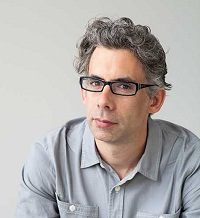
Alexander Chee, our Summer in Granada Fiction Instructor, feat in Elle, NY Times, The New Yorker, and on NPR

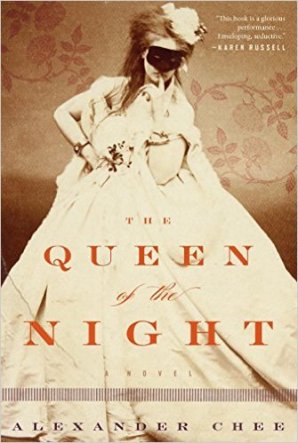
“A woman’s desire is either terrifying or it’s ignored. I think what’s terrifying, is that men want power, even over that. It is the one thing, in a sense, that a woman can withhold, her sexuality. It’s incontrovertible, the withholding of her pleasure—and that was a source of the courtesan’s power: the performance of pleasure. A courtesan not only played lover, but mother, too. You know, it was common to blame courtesans for the fall of the Second Empire—and that fascinated me. The idea that they bankrupted these poor young men, who spent so much money on them and made France so weak.”  — Alexander Chee on novel, The Queen of the Night

The Queen of the Night, Alexander Chee’s second novel, has received significant critical attention since its February 2016 debut.   Read more about The Queen of The Night at Alexander Chee in ElleThe New York TimesThe New Yorkerand NPR.

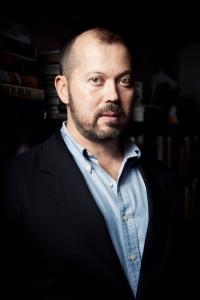
alexandercheeAlexander Chee
was born in Rhode Island, and raised in South Korea, Guam and Maine. He is a recipient of the 2003 Whiting Writers’ Award, a 2004 NEA Fellowship in Fiction, and residency fellowships from the MacDowell Colony, the VCCA, Ledig House, the Hermitage and Civitella Ranieri. His first novel,
Edinburgh (Picador, 2002), is a winner of the Michener Copernicus Prize, the AAWW Lit Award and the Lambda Editor’s Choice Prize, and was a Publisher’s Weekly Best Book of the Year and a Booksense 76 selection.  Chee, will be teaching at our Summer in Granada, Andalucía, Spain Writing Retreat (July 28-Aug 5, 2016).  The deadline to sign up for our Summer in Granada, Andalucia, Spain Writing Retreat is this April 15, 2016.  Apply at: https://cww.submittable.com/

Writer’s Digest Introduces: The Well-Sold Story Weekend Presented by Paula Munier

Screen Shot 2016-03-18 at 10.44.21 AM

The Cambridge Writers’ Workshop will be at the Writer’s Digest regional event, The Well-Sold Story Weekend Presented by Paula Munier (#WDBoston – @WritersDigest), this weekend. The event takes place March 19 – 20 at the Westin Boston Waterfront Hotel, Boston, Mass. The program is designed to help writers: see their work through a new lens, including the publisher’s and agent’s eyes; to utilize proven strategies for producing a drum-tight manuscript that hooks its reader from page one; and to be bold when promoting their book and themselves.

Paula Munier, a well-known agent, writer, editor, teacher and content strategist, is hosting The Well-Sold Story Weekend, which is open to any novelist, memoirist or short story writer who is ready to embrace the realities of publishing. The two-day event will also feature a conversation with William Martin, a New York Times Bestselling Author, award-winning writer of 10 novels, a recipient of the prestigious New England Book Award, and a Boston-area resident.

For more information on the event, check out @CamWritersWkshp for our live-tweets of the event!

Our Summer in Barcelona & Granada Nonfiction Faculty David Shields feat. on PBS / KCTS 9 for War is Beautiful

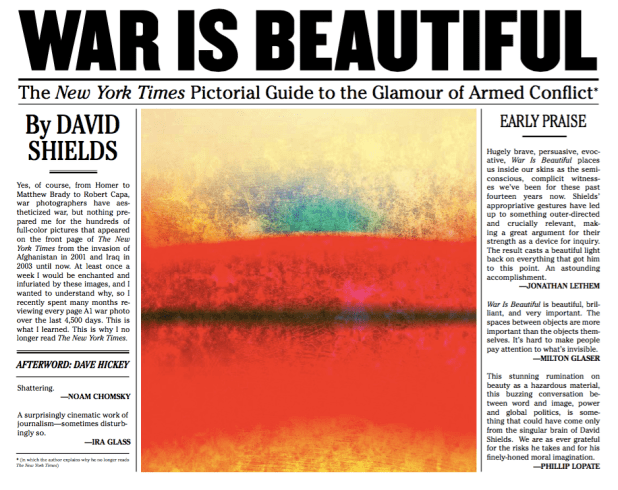
WarisBeautifulYes, of course, from Homer to Mathew Brady to Robert Capa, war photographers have aestheticized war, but nothing prepared me for the hundreds of full-color pictures that appeared on the front page of The New York Times from the invasion of Afghanistan in 2001 and Iraq in 2003 until now. At least once a week I would be enchanted and infuriated by these images, and I wanted to understand why, so I recently spent many months reviewing every page A1 war photo over the last 4,500 days. This is what I learned. This is why I no longer read The New York Times.” David Shields, War is Beautiful

In an interview with PBS/KCTS 9, Shields, a former “life-long subscriber of The New York Times,” discussed his motivation for writing War is Beautiful: “As the Homeland Security slogan goes, ‘If you see something, say something.’ I felt like I was seeing something and I felt compelled as a democratic citizen to say something.”

In War is Beautiful: The New York Times Pictorial Guide to the Glamour of Armed Conflict, bestseller David Shields critiques over a decade of “extraordinarily beautiful and. . .little war-like” war images.  The book contains 64 full-color photographs featured on the cover of the Times between 2001 and 2013.  During the interview, Shields states, “The book is meant to be problematically beautiful. I mean to ask of myself and my fellow citizens and fellow readers how much beauty are we prepared to swallow in the name of glorifying war.”  Watch the interview in its entirety visit PBS/KCTS 9.

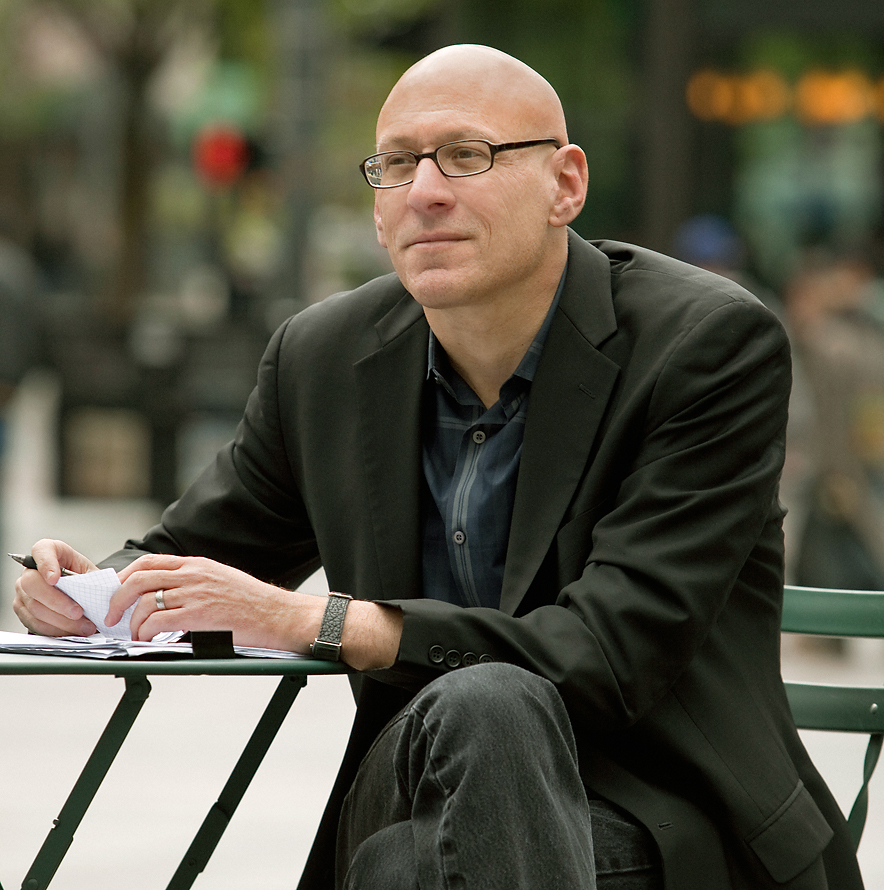
Author photo of David Shields, 2012.David Shields is the internationally bestselling author of twenty books, including Reality Hunger (named one of the best books of 2010 by more than thirty publications), The Thing About Life Is That One Day You’ll Be Dead (New York Times bestseller), and Black Planet (finalist for the National Book Critics Circle Award). Forthcoming from Knopf in February 2017 is Other People: Takes & Mistakes. The recipient of Guggenheim and NEA fellowships, Shields has published essays and stories in the New York Times Magazine, Harper’s, Esquire, Yale Review, Village Voice, Salon, Slate, McSweeney’s, and Believer. His work has been translated into twenty languages.  He is teaching at the Cambridge Writers’ Workshop Summer in Barcelona and South of France (July 18-26, 2016) and Summer in Granada (July 28 – August 5, 2016) Writing Retreats.


5 Ways the Practice Of Yoga is Like the Art Of Writing: A Conversation Inspired by the Cambridge Writers’ Workshop

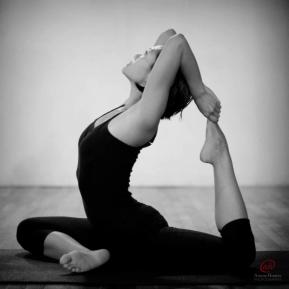
6169907365_6e87d5e1f7_oIn “5 Ways the Practice of Yoga is Like the Art of Writing,” writer Ko Im connects the two arts. The comparison came out of a conversation with the Cambridge Writers’ Workshop, which often combines yoga and writing – two wonderfully creative, nourishing processes. The full article can be read here.

Ko Im is a freelance writer, lifestyle enthusiast, voice over artist and yoga instructor in New York City. She is author and narrator of Broke, not Broken — a digital travel memoir.

Cambridge Writers’ Workshop Writing Retreats featured in Poets & Writers Magazine

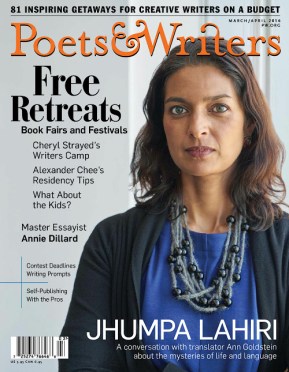
1455965954_poets-writers-march-april-2016-1The Cambridge Writers’ Workshop was featured in the March/April 2016 edition of Poets & Writers magazine! The retreats were published under the Conferences & Residencies section of the magazine in the Poets & Writers 2016 Guide to Stress-Free Writers Retreats. The CWW is honored to be a part of the 2016 guide.

The feature included three of our 2016 retreats: Spring in Newport, Rhode Island Writing & Yoga Retreat (April 22-24, 2016), Summer in Barcelona & South of France Writing Retreat (July 18 – July 26, 2016), and Summer in Granada Writing Retreat (July 28 – August 5, 2016).  The retreats offer the opportunity for writers of all genres and levels to work alongside award-winning authors & editors to hone their craft and expand their writing skills, while working on new or existing projects.

Faculty includes Bret Anthony Johnston (Barcelona & Narbonne), David Shields (Barcelona & Narbonne, Granada), Alexander Chee (Granada), Jade Sylvan (Newport), Rita Banerjee (Barcelona & Narbonne, Granada), and Diana Norma Szokolyai (Barcelona & Narbonne, Granada, Newport).

If you’d like to join us, please apply online at cww.submittable.com by March 15, 2016, and include a $5 application screening fee, along with a writing sample of either five pages of poetry or ten pages of prose. (Due to limited seats, early applications are encouraged, but check for rolling admission after deadline, depending on availability).

CWW Interview with Bret Anthony Johnston, Harvard Director of Creative Writing and our Barcelona & South of France Fiction Instructor

baj-bio-pic-2This year, our Barcelona & South of France Writing Retreat will take from July 18 – 26, 2016.  At the retreat, we’ll be hosting a wide variety of craft of writing seminars, creative writing workshops. One of our featured faculty members, Bret Anthony Johnston, sat down to speak with Cambridge Writers’ Workshop’s Emily Smith for an interview.  Johnston is the author of Remember Me Like This (2014) and the Director of Creative Writing at Harvard University. Read the interview below, and be sure to register for our Summer in Barcelona & South of France Writing Retreat by March 15, 2016!

Emily Smith: In “Don’t Write What You Know,” you point to a quote from Tim O’Brien’s “Good Form” about “story-truth” and “happening-truth.” I immediately thought of Faulkner’s attempts at truth-telling in The Sound and the Fury – that is, his attempt at objectivity through non-traditional narrative and perspective. How do you think truth functions in your own writing? 

Bret Anthony Johnston: Thanks for these good questions, Emily.  As a fiction writer, I’m far more interested in emotional truth than quantifiable fact.  Another way to say that might be that I’m more swayed by authenticity than accuracy.  And yet, of course, there’s a paradox here because fiction, unlike fact or lived experience, has the burden of believability.  Fiction has to be rendered with such care that its “truth” is unassailable.  Lived experience can be, and often is, utterly unbelievable, but fiction lives and dies by far stricter standards.  Fiction answers to a higher truth—or at least aspires to one.  There is, I believe, something deeply comforting in that reality.

ES: Your book Remember Me Like This has been described as “an exploration of human morality” and a “moral mystery.” In a New York Times review of the book, Eleanor Henderson wrote that your novel was a reminder of the ethics of narration. Does narrative have an obligation to be moral?18112175
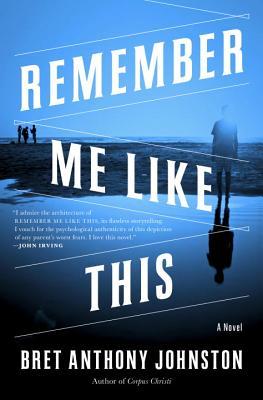
BAJ: First off, Eleanor Henderson is a saint, and I feel so lucky that my book made its way to her.  I also feel like I owe her a house or a pony or an island.  I couldn’t have asked for a better reader or review and I remain incredibly grateful.

The question of morality is nuanced and probably unanswerable, especially in the space we have here.  It’s equally possible that the question is more for the reader than the writer.  I will say that I have zero interest in judging my characters; in many ways, doing so feels unforgivable.  I don’t think of characters as being moral or immoral, good or bad, X or Y.  Really, the word ‘or’ feels too limiting, too judgmental, in my thinking about narrative.  I’m interested in reading and writing narratives where there is no “or”, but where “and” and only “and” prevails.  I want complexity in characters, in stories.  I want capaciousness.  I want to give the readers a full spectrum of experience, so if they choose to pass judgment on the characters or view a narrative through a lens of morality, they have enough context to do so.  The writer’s job is to present questions not answers.
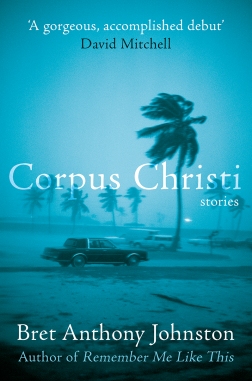
corpus-christi-pbES: Many of your stories are set in Texas. Aside from growing up in Corpus Christi, what do you think continues to draw your stories back to the state?

BAJ: One of the things we spend a lot of time talking about in my workshops is the notion that place forms and informs character, action and, of course, story.  My deeply held belief is that if a writer has access to a story, lived or imagined, then the writer is obligated to tell it, to write it.  Stories use writers to get written.  I’m interested in those stories that can only happen in a certain place; as a reader, writer, and teacher, I’m most moved by those stories that would be fundamentally different in a different location.  So far, in my own writing, those stories have taken place in Texas.  I have no agenda or goal.  I’m not at all trying to lay claim to a part of the world or stake out any kind of literary plot of land.  Rather, the stories from that place keep elbowing their way into my imagination.  They insist on being written and I feel lucky, profoundly lucky, to hear and see them.

ES: I recently finished Infinite Jest, and I know that you read during the release party for The Pale King, so I have to ask: how do you think the two books compare? There’s some discussion that The Pale King would not have been as good as Infinite Jest even if it had been completed.

BAJ: What matters to me is that Infinite Jest exists and people can access it at any time.  Likewise, I take comfort that many of his short stories and essays are in the world.  How one piece of work stacks up against another in a writer’s career is, to my mind, irrelevant.  He wrote some flat-out astonishing fiction and nonfiction. The books reward multiple readings in ways that few others do.  What more can a writer want?  What more can a reader want?  I can think of not one thing.

ES: What’s the best writing advice that you’ve personally received?

BAJ: I’ve benefited from so much advice over the years that it’s hard to choose, so I’ll just go with what first comes to mind, maybe because it’s what I’ve heard most recently.  Allan Gurganus said that when a writer has the choice between thinking or trusting her way out of a problem on the page, she should always opt for trust.  This feels so inarguably true to me that I wish I’d said it.

ES: Finally, I have to ask: you’re a skateboarding enthusiast, so what’s your favorite skateboard trick?

BAJ: The ones I’m trying to learn!

Bret Anthony Johnston is the author of the internationally best-selling novel Remember Me Like This, and author of  the award-winning Corpus Christi: Stories, which was named a Best Book of the Year by The Independent (London) and The Irish Times, and the editor of Naming the World and Other Exercises for the Creative Writer. His work appears in The Atlantic Monthly, Esquire, The Paris Review, Glimmer Train Stories, Virginia Quarterly Review, The Best American Short Stories, and elsewhere.  His awards include the Pushcart Prize, the Glasgow Prize for Emerging Writers, the Stephen Turner Award, the Cohen Prize, a James Michener Fellowship, the Kay Cattarulla Prize for short fiction, and many more. His nonfiction has appeared in The New York Times, the New York Times Magazine, The Wall Street Journal, Tin House, The Best American Sports Writing, and on NPR’s All Things Considered.  A graduate of the Iowa Writers’ Workshop, he’s the recipient of a National Endowment for the Arts Literature Fellowship and a 5 Under 35 honor from the National Book Foundation. He wrote the documentary film Waiting for Lightning, which was released in theaters around the world by Samuel Goldwyn Films. He teaches in the Bennington Writing Seminars and at Harvard University, where he is the Director of Creative Writing.
Cambridge Writers’ Workshop takes on AWP 2016 LA!

AWP2016Poster2

AWP16LAThe Cambridge Writers’ Workshop is coming to Los Angeles for the AWP Conference (March 30 – April 2, 2016)!! We’ve got some exciting plans for AWP, so anyone who is in Los Angeles for AWP should come see us.  Last year’s AWP  was a success with our bookfair table and reading at Boneshaker Books.

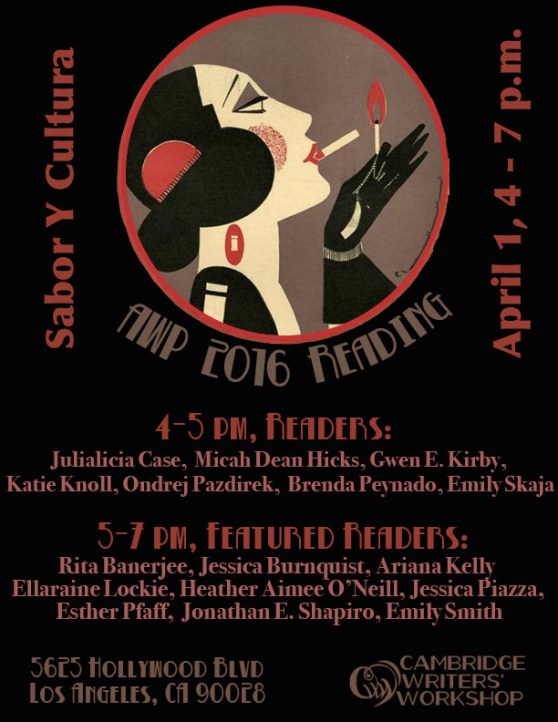
This year, you’ll be able to find us at Table 1157 and find information regarding our upcoming Spring in Newport, Rhode Island (April 22-25, 2016) Summer in Narbonne & Barcelona (July 18-26, 2016), and Summer in Granada, Spain (July  28-August 5, 2016) Writing Retreats. We’ll have updates on CREDO and information for those who want to become a member of the CWW or apply for internships.  We’ll also be hosting our AWP Reading: Cambridge Writers’ Workshop takes on Los Angeles! at Sabor y Cultura (located at 5625 Hollywood BlvdLos Angeles, CA 90028) on Friday, April 1, 2016 from 4-7 pm.  Our featured writers include Rita Banerjee, Jessica BurnquistJulialicia Case,  Micah Dean HicksAriana Kelly, Gwen E. KerbyKatie KnollEllaraine LockieHeather Aimee O’Neill,  Ondrej PazdirekBrenda Peynado, Esther Pfaff, Jessica PiazzaJonathan ShapiroEmily Smith, and Emily Skaja.

We hope to see you there!

Announcing New CWW Literary Internships (App. Deadline: March 15, 2016)

The Cambridge Writers’ Workshop is pleased to announce our two new literary internships for 2016. Those interested in applying for our Media (Audio/Visual) Development Internship or our Grant Writing and Program Development Internship should read the guidelines below and apply by March 15, 2016 on cww.submittable.com.

applyMedia (Audio/Visual) Development Internship 

Hours: 5-10 hours per week (NYC or remote commuting)
Duration: 1 year (renewable)
Deadline & Guidelines: Applications are due March 15, 2016.  Submit a cover letter and resume online.

The Cambridge Writers’ Workshop, Inc. seeks interns for our creative media team. Interns will further their knowledge in the following areas:

  • Editing and producing podcasts and videos for podcast platforms such as SoundCloud, iTunes, etc. and video platforms such as Vimeo, YouTube, etc.
  • Researching new media platforms and techniques
  • Copy editing promotional materials (print & web)
  • Formatting pieces for the web
  • Contributing to our Tumblr, Twitter, and Facebook pages
  • Attending regular meetings with the executive board

Ideal candidates:

  • Experience and familiarity with audio programs including, but not limited to, Audacity, Adobe Audition, WavePad, etc., as well as video programs including, but not limited to, Adobe Final Cut and Premier, iMovie, Avid, etc.
  • Experience producing content on a timely basis
  • Possess energy, enthusiasm, sense of humor, people skills, creativity
  • Have organizational skills, strict attention to detail, & ability to meet deadlines
  • Strong interest audio/video editing and publishing experience

Address the following questions in your cover letter:

  1. What makes you excited about interning with the Cambridge Writers’ Workshop?
  2. How will your skills help us as an organization?
  3. What skills do you hope to gain from your experience with the Cambridge Writers’ Workshop?

Please also include an audio/video portfolio with at least 3 media files you have previously completed or put together.

apply

* This is an unpaid internship but Federal Work Study hours may apply.  Please inquire about details at directors@cambridgewritersworkshop.org

applyGrant Writing & Program Development Internship 

Hours: 5-10 hours per week (NYC or remote commuting)
Duration: 1 year (renewable)
Deadline & Guidelines: Apply by the March 15, 2016 at cww.submittable.com. Submit a cover letter, résumé, and sample grant application online.

The Cambridge Writers’ Workshop, Inc. seeks interns for our grant writing team.  Interns will gain experience in:

Principle duties:

  • Researching grants
  • Identifying foundations and donors that match our mission
  • Applying for grants helping to lead fundraising events
  • Forming literary partnerships with organizations
  • Attending regular meetings with the executive board other duties:
  • Copy editing & formatting promotional materials (print & web)
  • Editing and generating web content (blogging about literary topics)
  • Editing and generating newsletter content
  • Contributing to our Tumblr, Twitter, and Facebook pages

Ideal candidates:

  • Experience writing successful applications for fellowships and grants
  • Experience working for nonprofits
  • Excellent persuasive writer & copyeditor
  • Possess energy, enthusiasm, sense of humor, people skills, creativity
  • Have organizational skills, strict attention to detail, & ability to meet deadlines
  • Strong interest editing/publishing experience
  • Experience with Photoshop & HTML helpful but not necessary

Address the following questions in your cover letter:

  1. What makes you excited about interning with the Cambridge Writers’ Workshop?
  2. How will your skills help us as an organization?
  3. What skills do you hope to gain from your experience with the Cambridge Writers’ Workshop?
  4. List any fellowships or grants you have won and year received.

apply

* This is an unpaid internship but course credit or Federal Work Study hours may apply.  Please inquire about details at directors@cambridgewritersworkshop.org

Congrats to CWW Poetry Faculty Rita Banerjee, shortlisted for the 2016 Willow Books Literature Award

willow-lit-awards-2016On February 5, 2016, Willow Books announced their shortlist for the Aquarius Press/ Willow Books 2016 Literature Awards.  Rita Banerjee’s poetry manuscript, “Echo in Four Beats,” was shortlisted for the award.  The contest is currently being judged by poet Tyehimba Jess, and information about Willow Books and their shortlist can be found here.

Rita Banerjee is the Executive Creative Director of the Cambridge Writers’ Workshop, and her writing has been featured in Electric Literature, VIDA: Women in Literary Arts, Queen Mob’s Tea House, and Riot Grrrl Magazine, and on KBOO Radio’s APA Compass.  She is author of the poetry collection, Cracklers at Night,and her novella, A Night with Kali, is forthcoming from Spider Road Press in 2016.  She is teaching at the Cambridge Writers’ Workshop Summer in Barcelona and South of France (July 18-26, 2016) and Summer in Granada (July 28 – August 5, 2016) Writing Retreats.

CWW Poetry Faculty Rita Banerjee discusses Amrita Pritam, Publishing, and Sexual Politics for VIDA: Women in Literary Arts Exclusive

AP2Rita Banerjee’s article, “Amrita Pritam: Sexual Politics and Publishing in mid-20th Century India” is now live as a VIDA Exclusive on VIDA: Women in Literary Arts.  In the article, Banerjee translates Pritam’s poem, “Night” from Hindi into English, and writes:

Writing from a minority perspective as an American, it’s often hard to find creative and intellectual predecessors who are writing from your culture of origin but who aren’t necessarily writing in English or just trying to be celebrities in the global Anglophone literary marketplace.  For South Asian writers, for women in the literary arts, and for writers who are looking to challenge the patriarchal hegemony of Anglo-American literature, Amrita Pritam is a must-know writer.  In the 1940s, she came to prominence as a political and feminist writer in India, first in Punjabi literature, then in Hindi and Urdu translation, and finally internationally.  By the 1950s, like Simone de Beauvoir and Bretty Friedan in the West, Pritam was challenging patriarchal values at home, redefining gender roles and narratives assigned to women, and openly challenging heteronormative sexual politics.  In doing so, she ushered in a new wave of feminist literature in mid-20th century India even as she faced criticism for her work from her male counterparts and from within the Punjabi, Hindi, Urdu, and South Asian publishing industries at large.

That was our tryst, yours and mine.
We slept on a bed of stones,
and our eyes, lips and finger tips,
became the words of your body and mine,
they then a made translation of this first book.

The Rig Veda was compiled much later.

– Amrita Pritam, “First Book”

In Pritam’s poetry, one is not born, but rather becomes a woman.  Her unflinching gaze at sex, her exploration of emotional and psychological nakedness, and a sense of self-irony and self-knowledge underwrite several of her poems.  In her poem, “First Book,” quoted above, Pritam explores how the very act of physical, sexual love, unbound by the mores of society, collapses the distances between the sacred and the profane.  And in her poem, “Amrita Pritam,” the poet takes a hard look at the mythos of her own public identity and the narratives of victimization ascribed to it.  She writes: “Pain: / I inhaled it, / quietly like a cigarette. // Song: / I flicked off / like ash / from the cigarette.” (Singh 29).

Read the full article on VIDA: Women in Literary Arts.